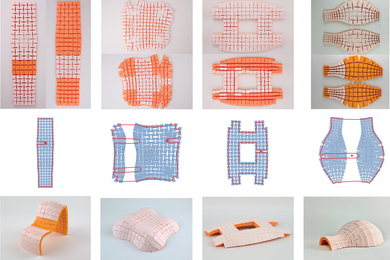
One pull of a string is all it takes to deploy these complex structures
A new method could enable users to design portable medical devices, like a splint, that can be rapidly converted from flat panels to a 3D object without any tools.
A new method could enable users to design portable medical devices, like a splint, that can be rapidly converted from flat panels to a 3D object without any tools.

MIT community members made headlines with key research advances and their efforts to tackle pressing challenges.

From robotics to apps like “NerdXing,” senior Julianna Schneider is building technologies to solve problems in her community.
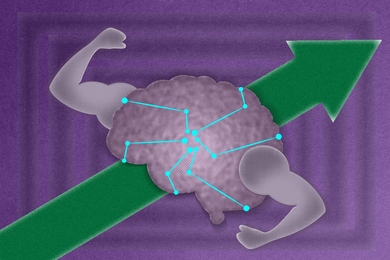
CSAIL researchers find even “untrainable” neural nets can learn effectively when guided by another network’s built-in biases using their guidance method.

MIT-IBM Watson AI Lab researchers developed an expressive architecture that provides better state tracking and sequential reasoning in LLMs over long texts.

The AI-powered tool could inform the design of better sensors and cameras for robots or autonomous vehicles.
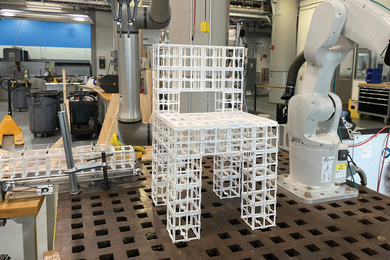
An AI-driven system lets users design and build simple, multicomponent objects by describing them with words.

The “self-steering” DisCIPL system directs small models to work together on tasks with constraints, like itinerary planning and budgeting.

The new certificate program will equip naval officers with skills needed to solve the military’s hardest problems.

The technique can help scientists in economics, public health, and other fields understand whether to trust the results of their experiments.

By stacking multiple active components based on new materials on the back end of a computer chip, this new approach reduces the amount of energy wasted during computation.

The speech-to-reality system combines 3D generative AI and robotic assembly to create objects on demand.

This new technique enables LLMs to dynamically adjust the amount of computation they use for reasoning, based on the difficulty of the question.
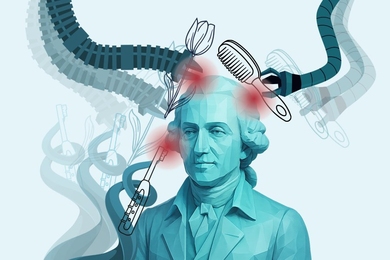
MIT CSAIL and LIDS researchers developed a mathematically grounded system that lets soft robots deform, adapt, and interact with people and objects, without violating safety limits.

Large language models can learn to mistakenly link certain sentence patterns with specific topics — and may then repeat these patterns instead of reasoning.