Improving the speed and energy-efficiency of AI agents
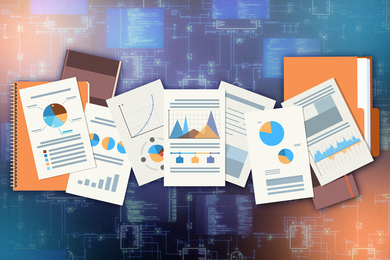
A new system, known as Murakkab, optimizes the design and deployment of multistep workflows that power AI applications.
Download RSS feed: News Articles / In the Media / Audio
A new system, known as Murakkab, optimizes the design and deployment of multistep workflows that power AI applications.
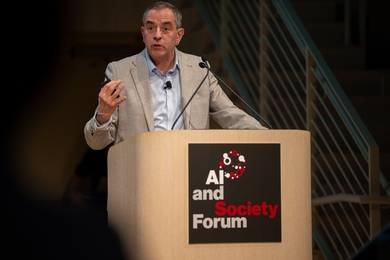
During the AI and Society Forum, leading MIT researchers examined critical questions about AI’s influence on employment and democracy.
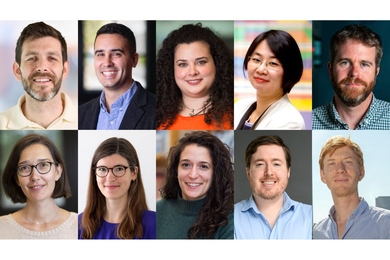
Ten faculty members have been granted tenure in five units across MIT’s School of Engineering.
MIT researchers provide a major upgrade to the nearly century-old idea of random utility models.
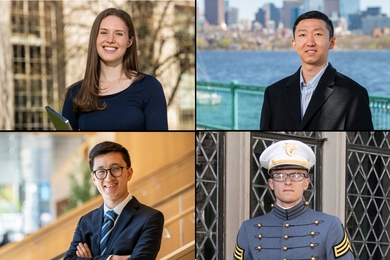
The fellowships in applied sciences, engineering, and mathematics recognize doctoral students who are pursuing solutions to the most pressing challenges in science and technology.
A new kernel called Fractal gives researchers a cleaner view of what’s happening inside a processor, and has already surfaced previously unknown behavior in Apple’s M1.
MIT researchers use the classic game as a test bed for AI agents, finding a small AI model can outperform the biggest ones at 1 percent of the cost.
The new ChartNet training dataset could improve the accuracy of vision-language models that help analyze business trends or interpret scientific figures.
MIT faculty member in electrical engineering and computer science to focus on innovation in engineering education and new pedagogical approaches.
The Udall Foundation identifies and rewards future leaders in tribal public policy, Indigenous health policy, and the environment.
The “MetaEase” technique provides a heads-up to potential scenarios that could cause long wait-times or outages.
An old patent from MIT Professor Bill Freeman inspired the new “Y-zipper,” a three-sided fastener that snaps gear, robots, and art into shape at the push of a button.
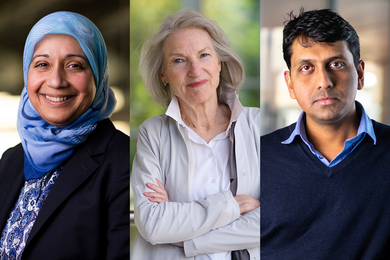
Afreen Siddiqi, Kathleen Thelen, and Vinod Vaikuntanathan, along with alumna Kate Manne, are appointed to the 2026 class of “trail-blazing fellows.”
Building on a long-standing MIT–IBM collaboration, the new lab will chart the convergence of AI, algorithms, and quantum computing.
A new method could bring more accurate and efficient AI models to high-stakes applications like health care and finance, even in under-resourced settings.