
Cache management improved once again
New version of breakthrough memory management scheme better accommodates commercial chips.
New version of breakthrough memory management scheme better accommodates commercial chips.
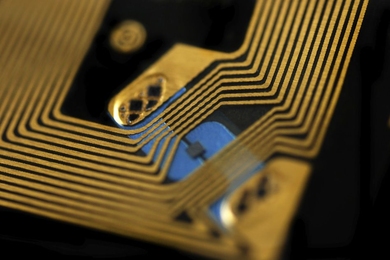
New technology could secure credit cards, key cards, and pallets of goods in warehouses.

Polymer nanowires that assemble in perpendicular layers could offer route to tinier chip components.

More efficient memory-management scheme could help enable chips with thousands of cores.
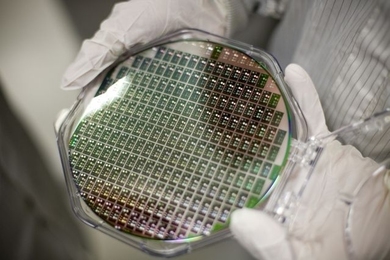
Lionel Kimerling, Rajeev Ram, and other MIT researchers explore practical ways to bring optical interconnection toward and directly onto chips.

New approach to distributing computations could make multicore chips much faster.
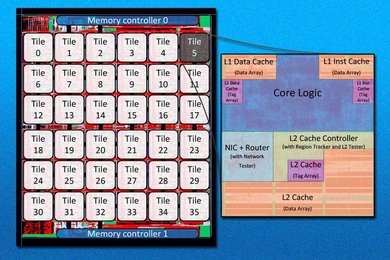
Design lets chip manage local memory stores efficiently using an Internet-style communication network.

“Lock-free” parallel algorithms may match performance of more complex “wait-free” algorithms.
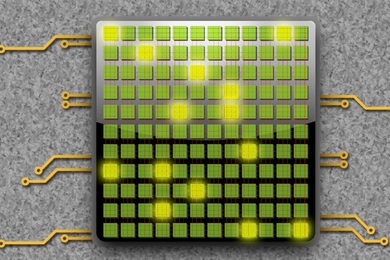
Cleverer management of the local memory banks known as ‘caches’ could improve computer chips’ performance while reducing their energy consumption.

A new language lets coders reason about the trade-off between fidelity of execution and power or time savings in the computers of the future.
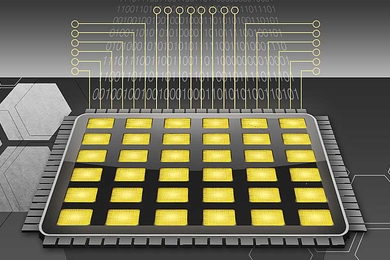
MIT research shows that it may be time to let software, rather than hardware, manage the high-speed on-chip memory banks known as ‘caches.’
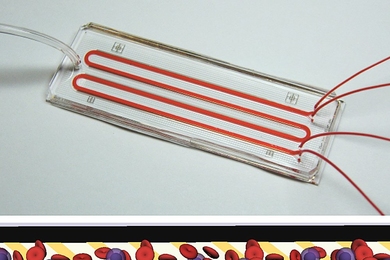
Device may be used to quickly detect signs of sepsis, other inflammatory diseases.

Researchers, in a step toward analyzing Mars for signs of life, find that gene-sequencing chip can survive space radiation.
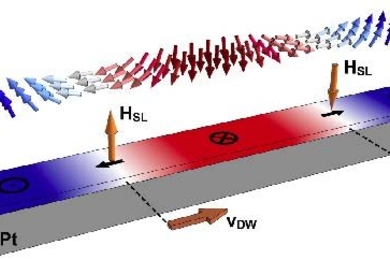
MIT researchers discover efficient control of magnetism in chiral ferromagnets.

A new video standard enables a fourfold increase in the resolution of TV screens, and an MIT chip was the first to handle it in real time.