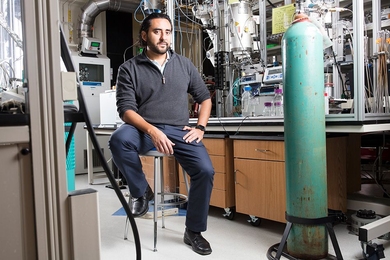
Yuriy Roman: A chemical engineer pursuing renewable energy
MIT professor devises new ways to generate useful chemicals and fuels from renewable resources.
MIT professor devises new ways to generate useful chemicals and fuels from renewable resources.
Graduate engineering program is No. 1 in the nation; MIT Sloan is No. 5.
MIT ranked within top 5 in 19 out of 48 subject areas.
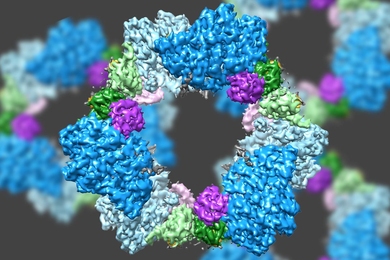
New finding suggests differences in how humans and bacteria control production of DNA’s building blocks.
Richard Schrock, trailblazer in organometallic chemistry, delivers annual Killian Lecture.
The award, he says, is an honor equal to his Nobel Prize, which he received in 2005.
MIT researchers are optimizing nanostructures for energy devices such as solar cells.
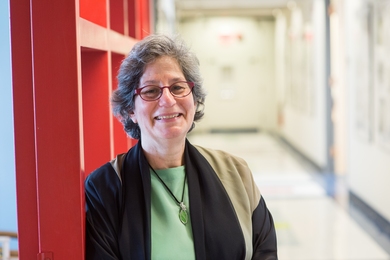
Professor of atmospheric chemistry honored for her contributions to atmospheric science.
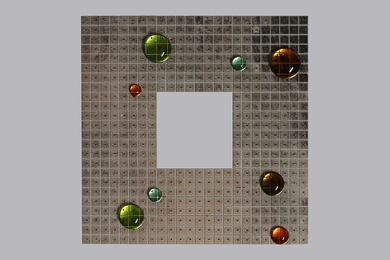
Using electric fields to manipulate droplets on a surface could enable high-volume, low-cost biology experiments.

Continuous-flow chemistry device used for drug production could find use in long-duration space missions.
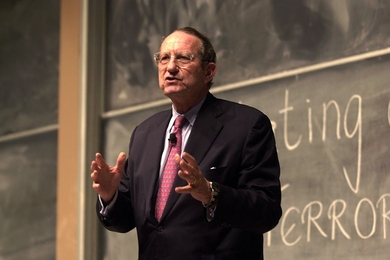
Putting limits on foreign students or technical publications would be counterproductive, write Deutch and Condoleezza Rice.
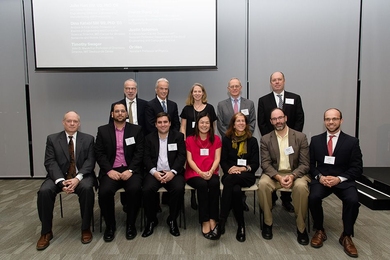
Six potentially paradigm-shifting research projects will make strides with funding from Professor Amar G. Bose Research Grants.
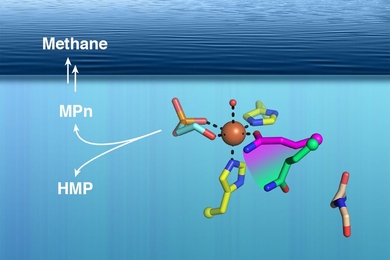
An abundant enzyme in marine microbes may be responsible for production of the greenhouse gas.
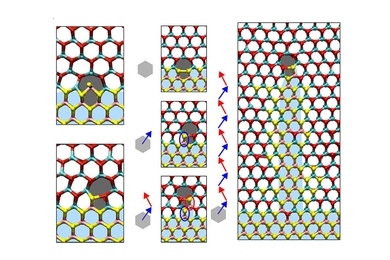
Subnanometer-scale channels in 2-D materials could point toward future electronics, solar cells.