Power-free system harnesses evaporation to keep items cool
Inspired by camel fur, a new two-layered material could provide extended cooling to preserve the freshness of perishable goods.
An online symposium explores roles for research universities and outlines the Institute’s efforts to be a testbed for research and policy innovations.
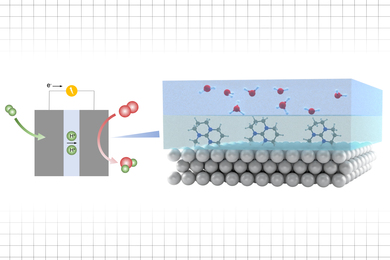
By developing novel electrochemical reactions, he hopes to find new ways to generate energy and reduce greenhouse gases.
Boosting the efficiency of single-cell RNA-sequencing helps reveal subtle differences between healthy and dysfunctional cells.
The atmospheric chemist shared the Nobel Prize for the discovery that chemicals known as CFCs deplete the ozone layer.
Each recipient will receive a $625,000, no-strings-attached award.
With computer models and lab experiments, researchers are working on a strategy for vaccines that could protect against any influenza virus.
MIT researchers find blocking the expression of the genes XPA and MK2 enhances the tumor-shrinking effects of platinum-based chemotherapies in p53-mutated cancers.
Shortening carbohydrates in the bacterial cell wall makes them more vulnerable to certain drugs.
Those selected for these positions receive additional support to pursue their research and develop their careers.
Rotating reservation systems and strict social distancing helped the DCIF experience as little interruption as possible.
Thirty-one MIT instructors honored for digital teaching excellence in extraordinary circumstances.
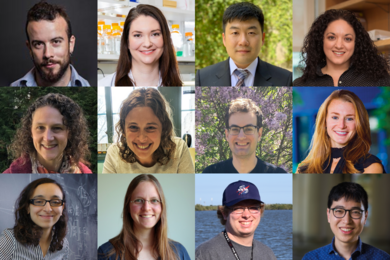
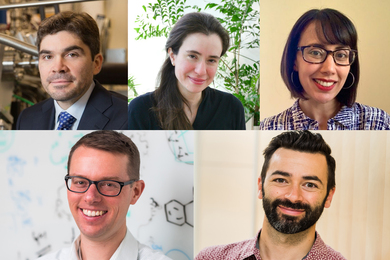
Joining the School of Science, 10 faculty members expand the departments of Biology; Chemistry; Earth, Atmospheric and Planetary Sciences; Mathematics; and Physics.
Alison Wendlandt explores how the layout of atoms in molecules, such as sugars and drugs, can affect their nature and our bodies.