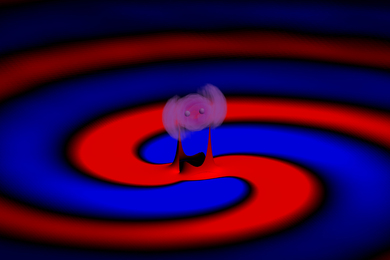
A new way to spot signs of dark matter
Gravitational waves emitted by colliding black holes may bear imprints of dark matter, which physicists could detect with a new model.
Gravitational waves emitted by colliding black holes may bear imprints of dark matter, which physicists could detect with a new model.
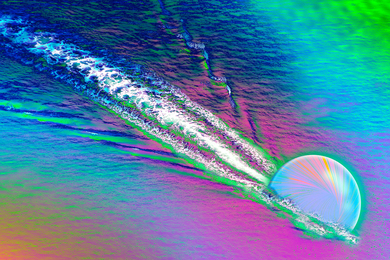
MIT physicists observed the first clear evidence that quarks create a wake as they speed through quark-gluon plasma, confirming the plasma behaves like a liquid.
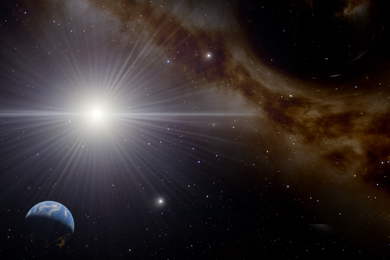
If a new proposal by MIT physicists bears out, the recent detection of a record-setting neutrino could be the first evidence of elusive Hawking radiation.
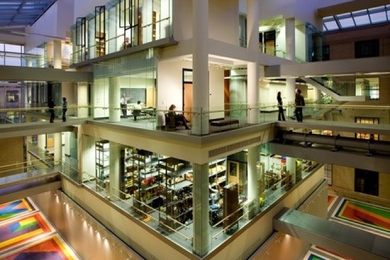
Gift from the Leinweber Foundation, in addition to a $5 million commitment from the School of Science, will drive discovery, collaboration, and the next generation of physics leaders.
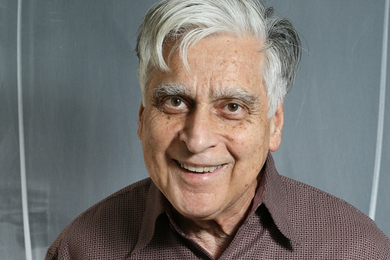
On the physics faculty for nearly 40 years and a member of the Center for Theoretical Physics, he focused on the interactions of hadrons and developed an R-matrix formulation of scattering theory.
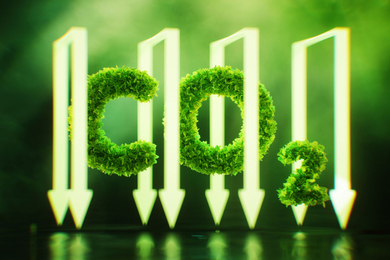
In a report on the feasibility of removing carbon dioxide from the atmosphere, physicists say these technologies are “not a magic bullet, but also not a no-go.”
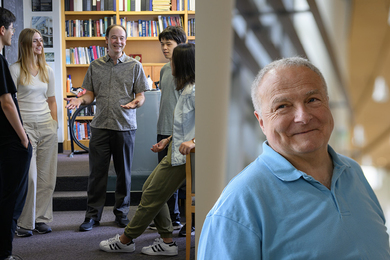
MIT professors Iain Stewart and Roberto Fernandez are “Committed to Caring”
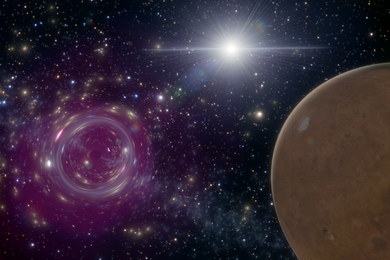
Watching for changes in the Red Planet’s orbit over time could be new way to detect passing dark matter.
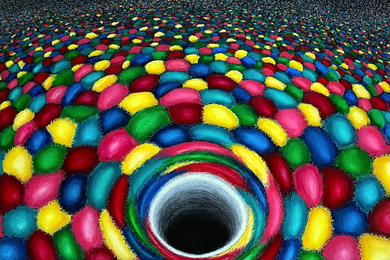
In the first quintillionth of a second, the universe may have sprouted microscopic black holes with enormous amounts of nuclear charge, MIT physicists propose.

She says one question drives her work: “Which pillars of gravitational physics are just not true?”
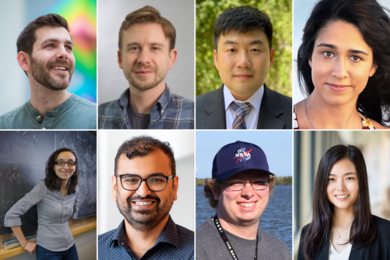
Fellows honored for creativity, innovation, and research accomplishments.
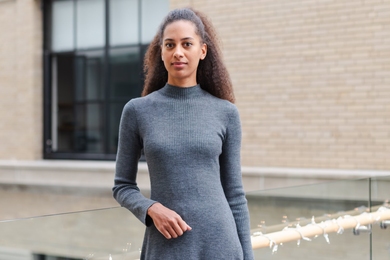
Cosmologist and MLK Scholar Morgane König uses gravitational waves to study the universe’s origins, inflation, and present trajectory.

Martin Luther King Jr. Visiting Professors and Scholars will enhance and enrich the MIT community through engagement with students and faculty.

MIT assistant professor of physics shares award for understanding the large-scale structure of the universe.
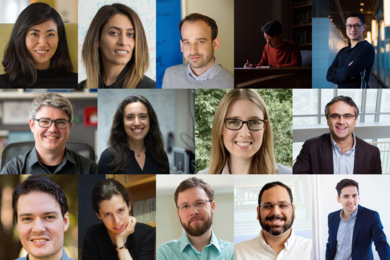
Faculty members were recently granted tenure in the departments of Biology, Brain and Cognitive Sciences, Chemistry, EAPS, and Physics.