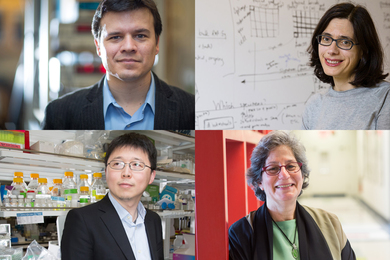
Four MIT scientists honored with 2021 National Academy of Sciences awards
Pablo Jarillo-Herrero, Aviv Regev, Susan Solomon, and Feng Zhang are the recipients of distinguished awards for major contributions to science.
Pablo Jarillo-Herrero, Aviv Regev, Susan Solomon, and Feng Zhang are the recipients of distinguished awards for major contributions to science.
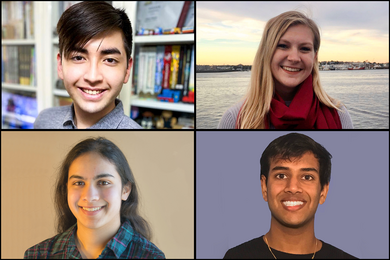
In two years, the MIT Quest for Intelligence has allowed hundreds of students to explore AI in its many applications.
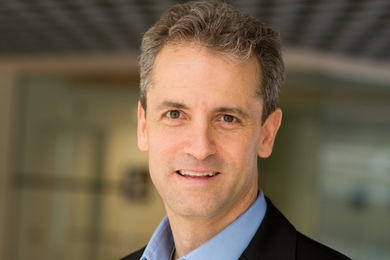
Brain and cognitive sciences professor will lead the Institute’s interdisciplinary initiative to advance research in natural and artificial intelligence.

Two MIT faculty members earn funding from the G. Harold and Leila Y. Mathers Foundation.
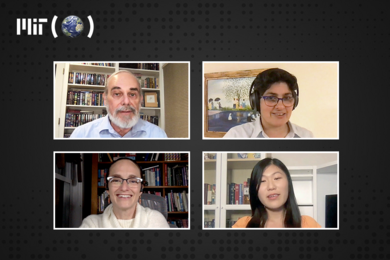
First virtual MIT Better World gathering featured MIT researchers sharing some of the ways the Institute excels as a hub of science and innovation.
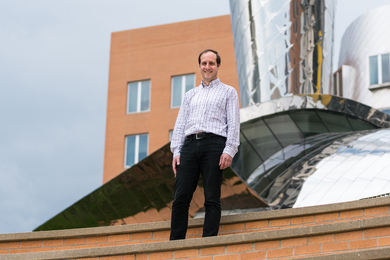
EECS faculty head of artificial intelligence and decision making honored for significant and extended contributions to the field of AI.

The brain uses different frequency rhythms and cortical layers to suppress expected stimulation and increase activity for what’s novel.
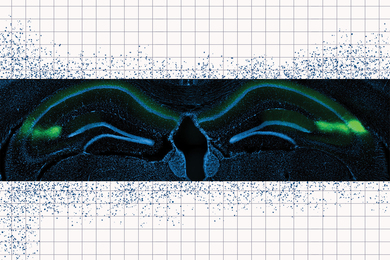
Findings suggest this hippocampal circuit helps us to maintain our timeline of memories.

Frontal brain region overrides reflexive inclination of a deeper, older region when rules require.
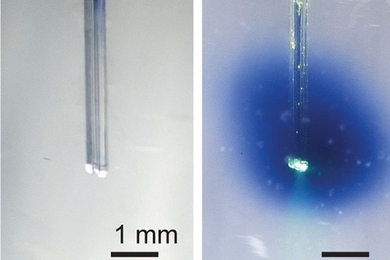
Miniaturized device activates drugs in a small region deep within the brain.
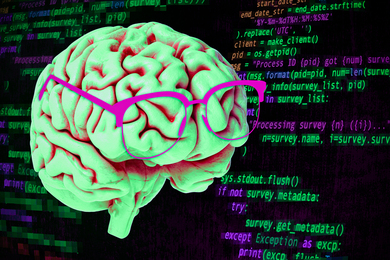
Neuroscientists find that interpreting code activates a general-purpose brain network, but not language-processing centers.
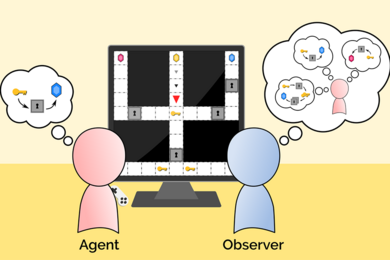
A new algorithm capable of inferring goals and plans could help machines better adapt to the imperfect nature of human planning.
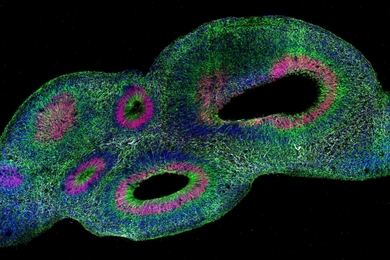
Unbiased, high-throughput analysis pipeline improves utility of “minibrains” for understanding development and diseases such as Zika infection.

Opioid receptor MOR1 changes discovered in neurodegenerative disease model.
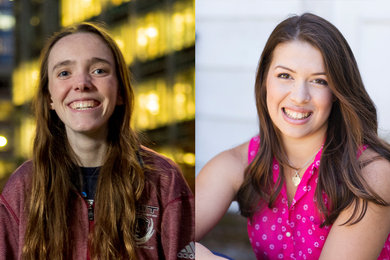
Katie Collins and Marla Odell are heading to the United Kingdom next fall for two years of graduate study.