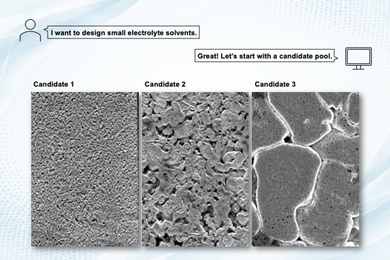
Solving the solvent problem
By focusing on electrolytes, MIT scientists are making sodium-metal batteries a more practical energy storage option.
By focusing on electrolytes, MIT scientists are making sodium-metal batteries a more practical energy storage option.
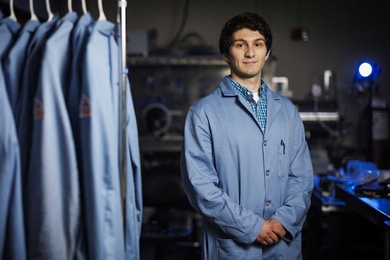
PhD student Hugh Smith works to develop sodium-ion batteries, whose components are more abundant and accessible than those of conventional lithium-ion technology.
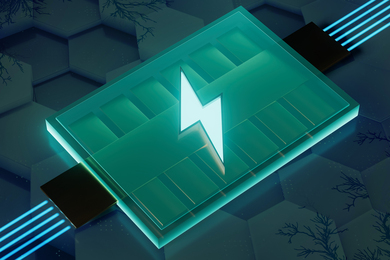
New research could help prevent the formation of tiny seeds of lithium metal within the electrolyte, enabling batteries that charge faster and last longer.

The low-temperature process could unlock cleaner lithium from America’s abundant hard rock while minimizing waste.

When it comes to emissions, individual driving patterns matter as much as how “green” the regional electricity mix is, MIT researchers report.
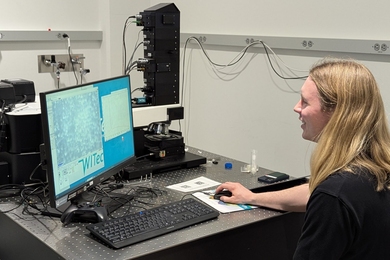
Startup accelerator program grows to over 30 companies, almost half of them with MIT pedigrees.

Co-founded by Dan Sobek ’88, SM ’92, PhD ’97, 1s1 Energy has developed electrochemical cell materials for hydrogen electrolyzers that it says reduces energy use by 30 percent.

A new model measures defects that can be leveraged to improve materials’ mechanical strength, heat transfer, and energy-conversion efficiency.

New insights into metallic cracks that harm battery performance could advance the longstanding quest to develop energy-dense solid-state batteries.

While the growing energy demands of AI are worrying, some techniques can also help make power grids cleaner and more efficient.
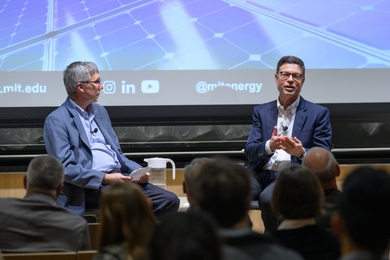
At MITEI’s Fall Colloquium, General Motors’ battery development expert emphasized how affordability, accessibility, and commercialization can position the US as a leader in battery tech.

Industry leaders agree collaboration is key to advancing critical technologies.
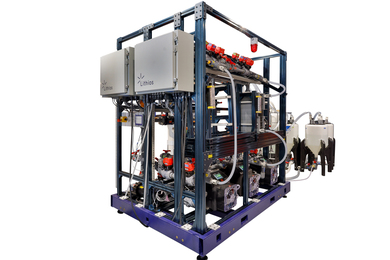
Lithios, founded by Mo Alkhadra PhD ’22 and Professor Martin Bazant, is scaling up an electrochemical lithium extraction technology to secure supply chains of the critical metal.
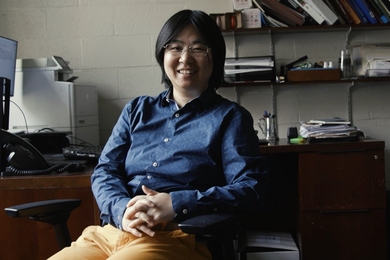
Sili Deng, the Doherty Chair in Ocean Utilization and associate professor of mechanical engineering at MIT, is driving research into sustainable and efficient combustion technologies.
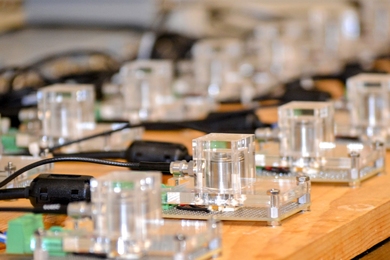
New findings could provide a way to monitor batteries for sounds that could guide manufacturing, indicate remaining usable life, or flag potential safety issues.