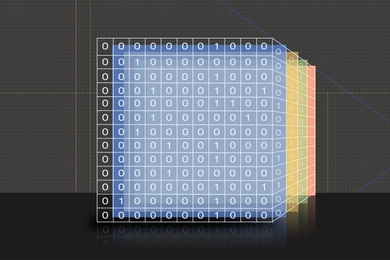
Faster big-data analysis
System for performing “tensor algebra” offers 100-fold speedups over previous software packages.
System for performing “tensor algebra” offers 100-fold speedups over previous software packages.

With Shelley, the world’s first artificial intelligence-human horror story collaboration, MIT researchers aim for goosebumps.
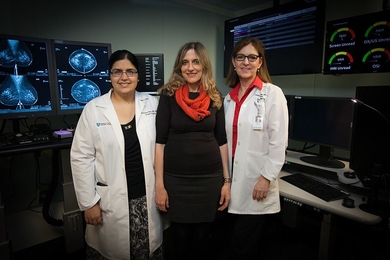
Model developed at MIT’s Computer Science and Artificial Intelligence Laboratory could reduce false positives and unnecessary surgeries.
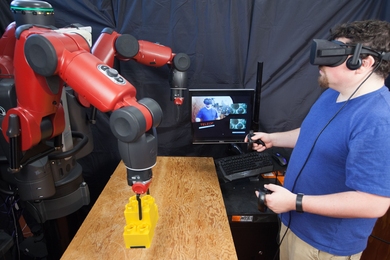
A virtual reality system from the Computer Science and Artificial Intelligence Laboratory could make it easier for factory workers to telecommute.
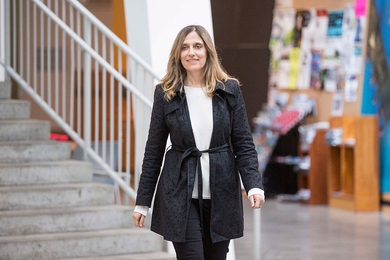
MIT computer scientist who studies natural language processing and machine learning wins $625,000 prize.
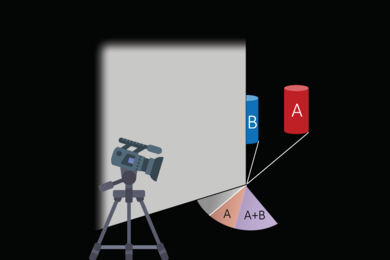
Using smartphone cameras, system for seeing around corners could help with self-driving cars and search-and-rescue.
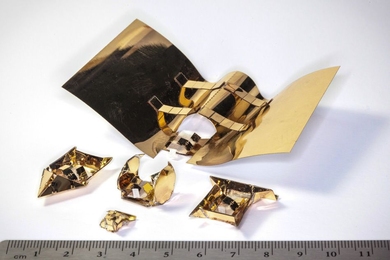
Shape-shifting device from CSAIL can walk, roll, sail, and glide using recyclable exoskeletons.
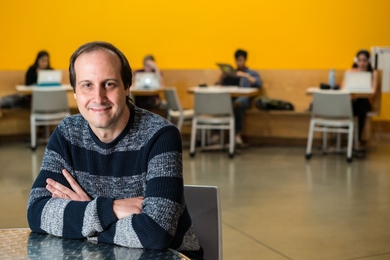
Computer vision and machine learning expert Antonio Torralba to lead new artificial intelligence research lab.
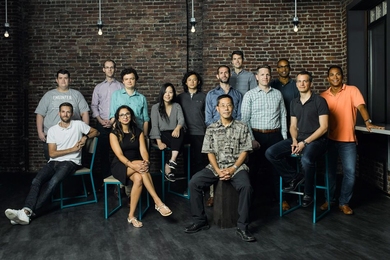
New venture launched by MIT will support “tough-tech” companies at work on transformative ideas that take time to commercialize.

New research describes a price-optimization method to increase online retailers’ revenue, market share, and profit.
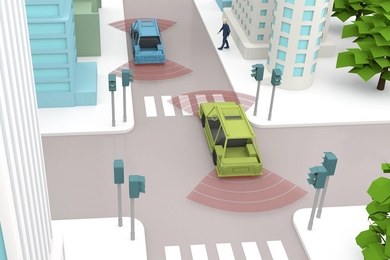
MIT Media Lab professor considers the trust gap between people and autonomous vehicles.

General-purpose technique sheds light on inner workings of neural nets trained to process language.
Lab seeks to expand the boundaries of research on artificial intelligence.
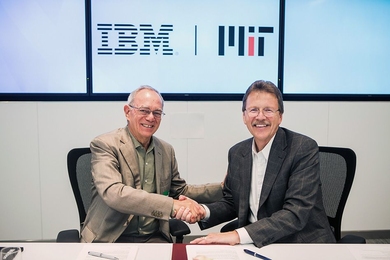
IBM plans to make a 10-year, $240 million investment in new lab with MIT to advance AI hardware, software, and algorithms.
A new major combining computer science and economics will prepare students for designing the virtual marketplaces of the future.