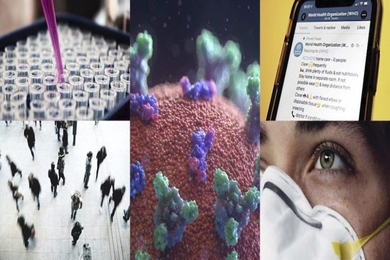
Faculty receive funding to develop artificial intelligence techniques to combat Covid-19
C3.ai Digital Transformation Institute awards $5.4 million to top researchers to steer how society responds to the pandemic.
C3.ai Digital Transformation Institute awards $5.4 million to top researchers to steer how society responds to the pandemic.
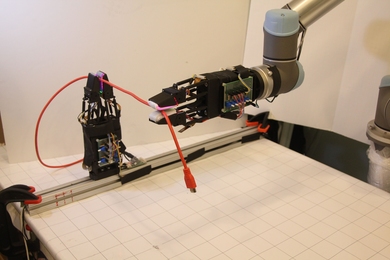
Robotic gripper with soft sensitive fingers developed at MIT can handle cables with unprecedented dexterity.

Juejun Hu pushes the frontiers of optoelectronics for biological imaging, communications, and consumer electronics.

The new open access, rapid-review overlay journal aims to combat misinformation in Covid-19 research.
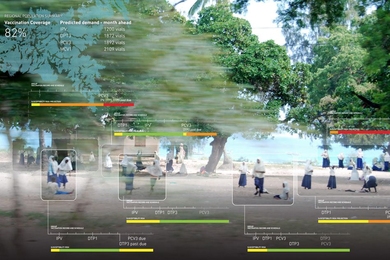
The startup macro-eyes uses artificial intelligence to improve vaccine delivery and patient scheduling.

Music gesture artificial intelligence tool developed at the MIT-IBM Watson AI Lab uses body movements to isolate the sounds of individual instruments.

Expert in personal social robots will work with lab faculty and researchers to develop strategic research initiatives, and to explore new funding mechanisms.

The startup ClosedLoop has created a platform of predictive models to help organizations improve patient care.

DriveSeg contains precise, pixel-level representations of many common road objects, but through the lens of a continuous video driving scene.
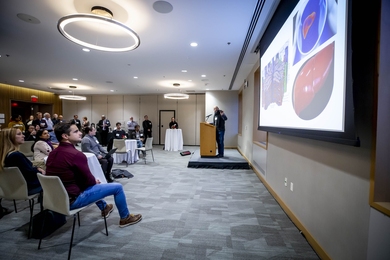
Research projects will harness the power of artificial intelligence to positively impact human health.

Researchers capture our shifting gaze in a model that suggests how to prioritize visual information based on viewing duration.
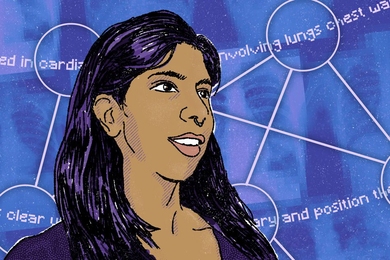
PhD student Geeticka Chauhan draws on her experiences as an international student to strengthen the bonds of her MIT community.

The design could advance the development of small, portable AI devices.
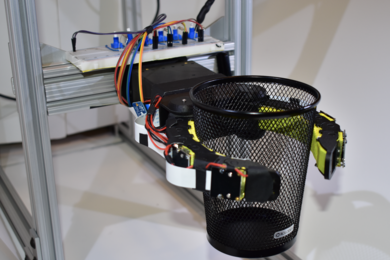
In a pair of papers from MIT CSAIL, two teams enable better sense and perception for soft robotic grippers.

UROP students explore applications in robotics, health care, language understanding, and nuclear engineering.