
Myriam Heiman named director of The Picower Institute for Learning and Memory
Heiman, who studies neurodegenerative diseases such as Huntington’s and Parkinson’s, will lead the institute beginning July 1.
Heiman, who studies neurodegenerative diseases such as Huntington’s and Parkinson’s, will lead the institute beginning July 1.

Nearly 100 MIT students participate in a buddy program that assists Boston-area residents.

Founded by Jake Donoghue PhD ’19 and former MIT researcher Jarrett Revels, the company is creating an AI-driven platform to help diagnose and treat disease.
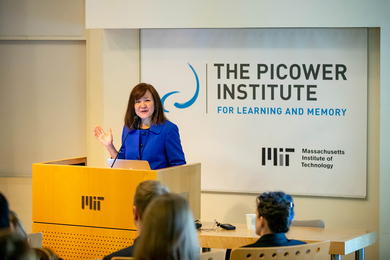
Tsai, who has grown the MIT neuroscience institute, will increase focus on research including Alzheimer’s disease and Down syndrome.
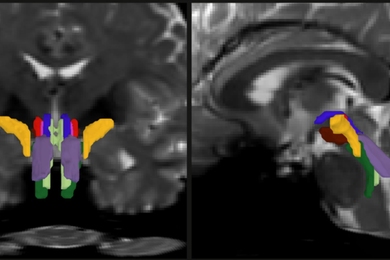
Opening a new window on the brainstem, a new tool reliably and finely resolves distinct nerve bundles in live diffusion MRI scans, revealing signs of injury or disease.

Learning more about this structure could help scientists find ways to block Tau from forming tangles in the brain of Alzheimer’s patients.

Five volunteers received 40Hz stimulation for around two years after an early-stage clinical study. Those with late-onset Alzheimer’s performed better on assessments than Alzheimer’s patients outside the trial.
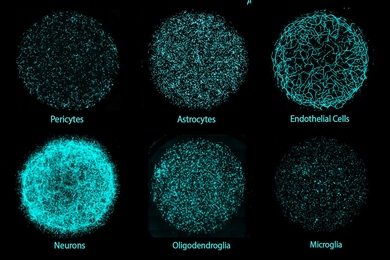
Cultured from induced pluripotent stem cells, “miBrains” integrate all major brain cell types and model brain structures, cellular interactions, activity, and pathological features.
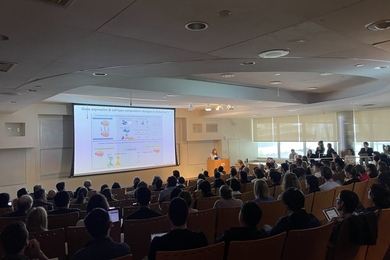
Speakers at MIT’s Aging Brain Initiative symposium described how immune system factors during aging contribute to Alzheimer’s, Parkinson’s and other conditions. The field is leveraging that knowledge to develop new therapies.
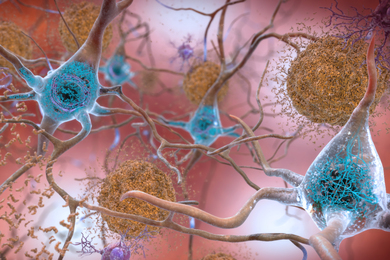
Lipid metabolism and cell membrane function can be disrupted in the neurons of people who carry rare variants of ABCA7.
Study of 3.5 million cells from more than 100 human brains finds Alzheimer’s progression — and resilience to disease — depends on preserving epigenomic stability.
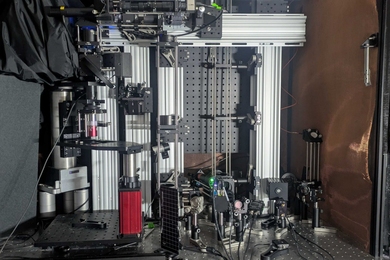
By combining several cutting-edge imaging technologies, a new microscope system could enable unprecedentedly deep and precise visualization of metabolic and neuronal activity, potentially even in humans.

Pathways involved in DNA repair and other cellular functions could contribute to the development of Alzheimer’s.
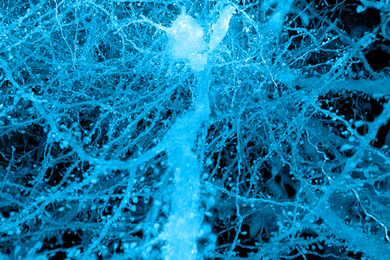
Since an MIT team introduced expansion microscopy in 2015, the technique has powered the science behind kidney disease, plant seeds, the microbiome, Alzheimer’s, viruses, and more.
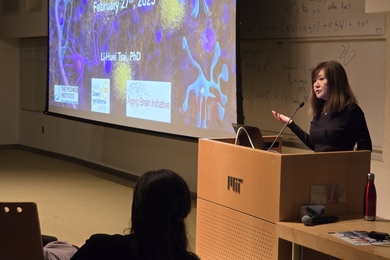
A decade of studies provide a growing evidence base that increasing the power of the brain’s gamma rhythms could help fight Alzheimer’s, and perhaps other neurological diseases.