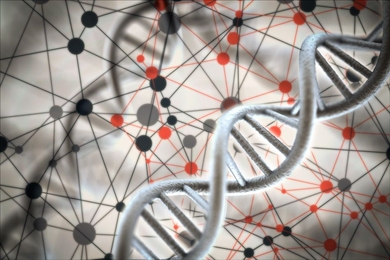
Getting metabolism right
Analysis of 89 models of metabolic processes finds flaws in 44 of them — but suggests corrections.
Analysis of 89 models of metabolic processes finds flaws in 44 of them — but suggests corrections.
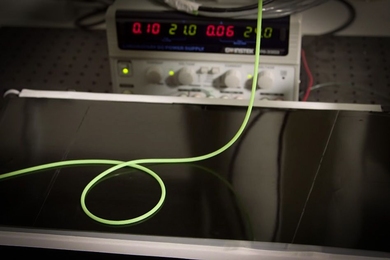
A simulation technology from movies is used to predict coiling patterns in the lab.

Cognitive coexistence radio and other technologies will help alleviate spectrum congestion for wireless devices.

Coding scheme for interactive communication is the first to near optimality on three classical measures.

Deep-learning algorithm can weigh up a neighborhood better than humans.
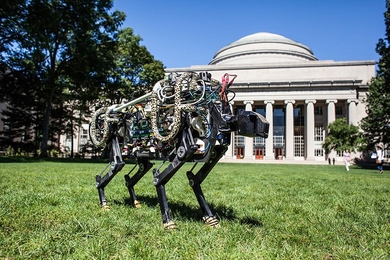
New algorithm enables MIT cheetah robot to run and jump, untethered, across grass.

A new analytic framework enables analysis of GPS data on 150 million cab rides in New York City.
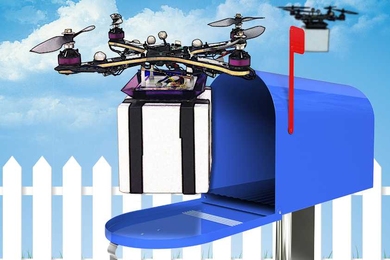
New algorithm lets drones monitor their own health during long package-delivery missions.
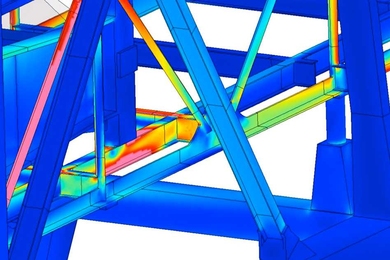
Novel software by Akselos drastically increases speed, ease of 3-D engineering simulations.
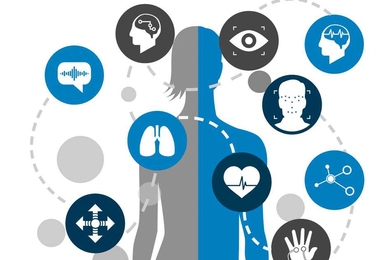
Using neuroscience tools, Innerscope Research explores the connections between consumers and media.
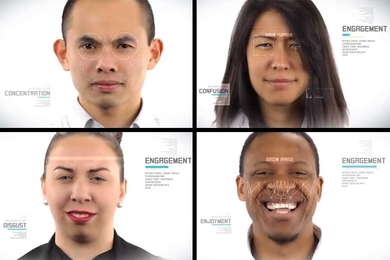
With emotion-tracking software, Affectiva attracts big-name clients, aims for “mood-aware” Internet.
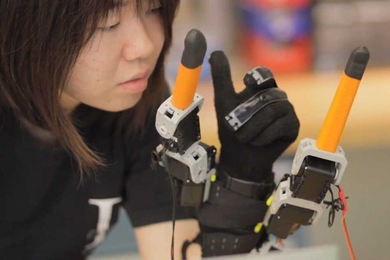
New wrist-mounted device augments the human hand with two robotic fingers.

New system could reduce data-transmission delays across server farms by 99.6 percent.


“Lock-free” parallel algorithms may match performance of more complex “wait-free” algorithms.