
New technique makes AI models leaner and faster while they’re still learning
Researchers use control theory to shed unnecessary complexity from AI models during training, cutting compute costs without sacrificing performance.
Researchers use control theory to shed unnecessary complexity from AI models during training, cutting compute costs without sacrificing performance.

Researchers developed a system that intelligently balances workloads to improve the efficiency of flash storage hardware in a data center.

MIT researchers developed a testing framework that pinpoints situations where AI decision-support systems are not treating people and communities fairly.
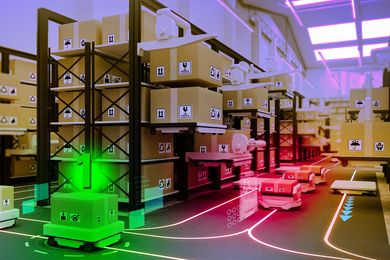
This new approach adapts to decide which robots should get the right of way at every moment, avoiding congestion and increasing throughput.

Academia-industry relationship is an early-stage accelerator, supporting professional progress and research.

Professor Jesse Thaler describes a vision for a two-way bridge between artificial intelligence and the mathematical and physical sciences — one that promises to advance both.
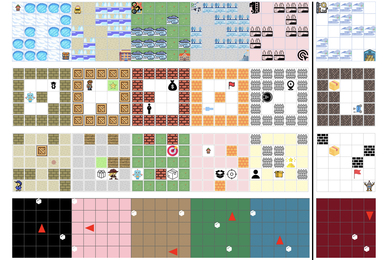
A new hybrid system could help robots navigate in changing environments or increase the efficiency of multirobot assembly teams.
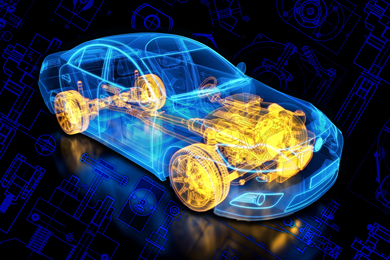
The approach could help engineers tackle extremely complex design problems, from power grid optimization to vehicle design.

Lincoln Laboratory intern Ivy Mahncke developed and tested algorithms to help human divers and robots navigate underwater.
By leveraging idle computing time, researchers can double the speed of model training while preserving accuracy.

By providing holistic information on a cell, an AI-driven method could help scientists better understand disease mechanisms and plan experiments.
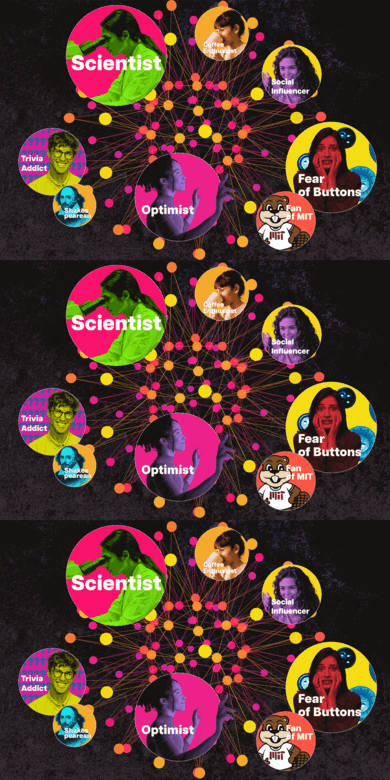
A new method developed at MIT could root out vulnerabilities and improve LLM safety and performance.

By minimizing the need to drive around looking for a parking spot, this technique can save drivers up to 35 minutes — and give them a realistic estimate of total travel time.
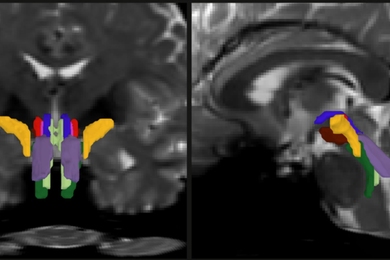
Opening a new window on the brainstem, a new tool reliably and finely resolves distinct nerve bundles in live diffusion MRI scans, revealing signs of injury or disease.
EnCompass executes AI agent programs by backtracking and making multiple attempts, finding the best set of outputs generated by an LLM. It could help coders work with AI agents more efficiently.