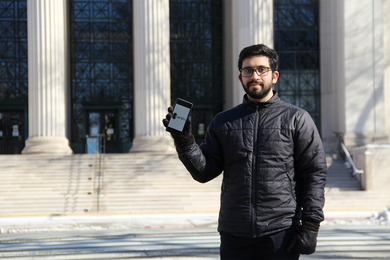
Crowdsourcing data on road quality and excess fuel consumption
MIT researchers are using smartphones to gather roadway information previously inaccessible to many departments of transportation.
MIT researchers are using smartphones to gather roadway information previously inaccessible to many departments of transportation.
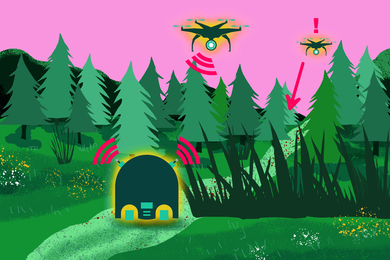
Algorithm enables robot teams to complete missions, such as mapping or search-and-rescue, with minimal wasted effort.
Lincoln Laboratory connects counter–human trafficking community in pursuit of technology to help investigate cases.
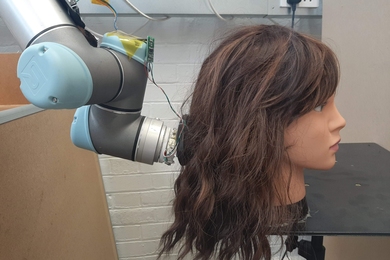
Robotic arm equipped with a hairbrush helps with brushing tasks and could be an asset in assistive-care settings.

Design of miniature optical systems could lead to future cell phones that can detect viruses and more.
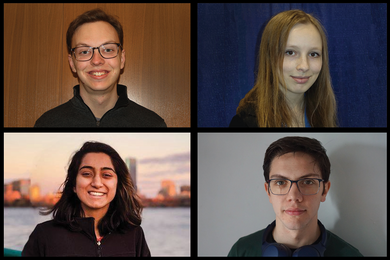
SuperUROP scholars apply deep learning to improve accuracy of climate models, profitably match computers in the cloud with customers, and more.

Her research focuses on more-efficient deep neural networks to process video, and more-efficient hardware to run applications.
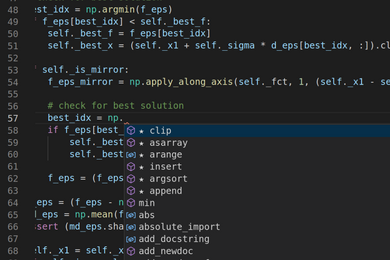
Researchers propose a method for finding and fixing weaknesses in automated programming tools.
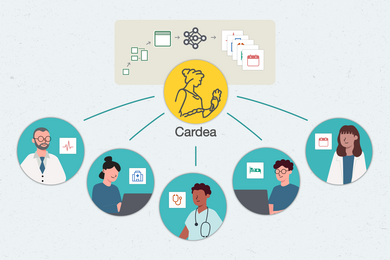
Cardea software system aims to bring the power of prediction to hospitals by streamlining complex machine learning processes.
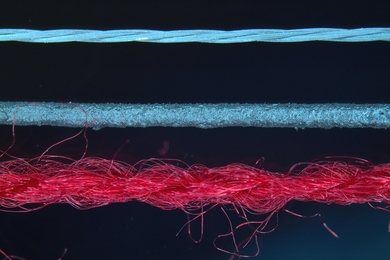
By measuring a person’s movements and poses, smart clothes developed at MIT CSAIL could be used for athletic training, rehabilitation, or health-monitoring for elder-care facilities.

Wireless sensing technology could help improve patients’ technique with inhalers and insulin pens.
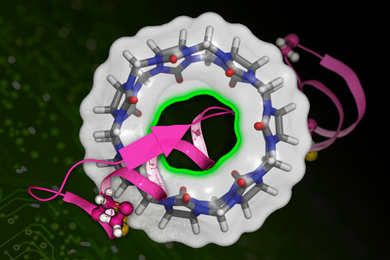
New technique speeds up calculations of drug molecules’ binding affinity to proteins.

The 21-digit solution to the decades-old problem suggests many more solutions exist.

Method builds on gaming techniques to help autonomous vehicles navigate in the real world, where signals may be imperfect.
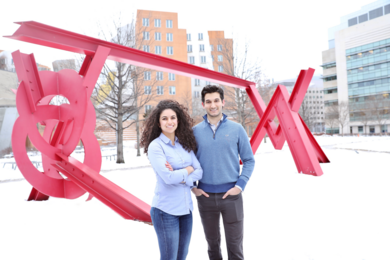
With technology new and old, instructors try to recreate the interactivity of their pre-Covid classroom.