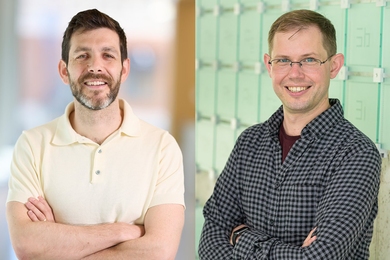
Jacob Andreas and Brett McGuire named Edgerton Award winners
The associate professors of EECS and chemistry, respectively, are honored for exceptional contributions to teaching, research, and service at MIT.
The associate professors of EECS and chemistry, respectively, are honored for exceptional contributions to teaching, research, and service at MIT.
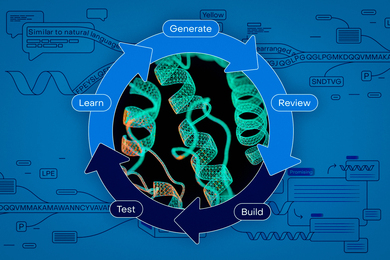
Founded by Tristan Bepler PhD ’20 and former MIT professor Tim Lu PhD ’07, OpenProtein.AI offers researchers open-source models and other tools for protein engineering.
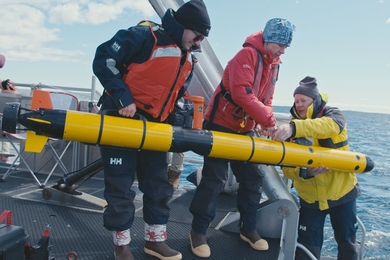
Researchers are developing hardware and algorithms to improve collaboration between divers and autonomous underwater vehicles engaged in maritime missions.
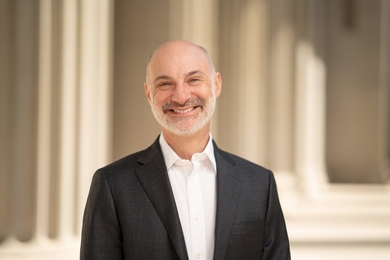
As the School of Humanities, Arts, and Social Sciences marks 75 years, Dean Agustín Rayo reflects on how AI is reshaping higher education and why SHASS disciplines continue to be central to MIT’s mission.
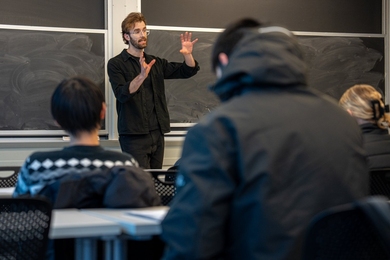
As the NC Ethics of Technology Postdoctoral Fellow, Michal Masny is advancing dialogue, teaching, and research into the social and ethical dimensions of new computing technologies.

Researchers use control theory to shed unnecessary complexity from AI models during training, cutting compute costs without sacrificing performance.
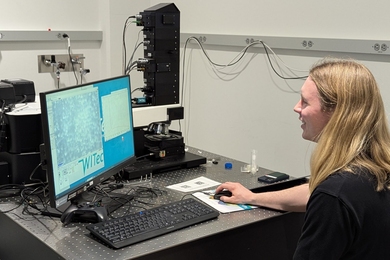
Startup accelerator program grows to over 30 companies, almost half of them with MIT pedigrees.
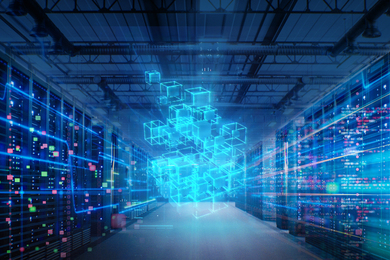
Researchers developed a system that intelligently balances workloads to improve the efficiency of flash storage hardware in a data center.
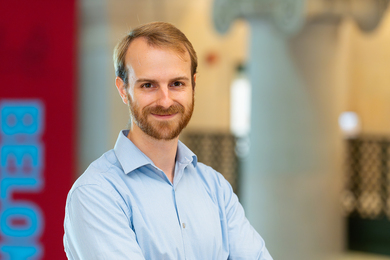
Dean Price, assistant professor in the Department of Nuclear Science and Engineering, sees a bright future for nuclear power, and believes AI can help us realize that vision.
MIT researchers developed a testing framework that pinpoints situations where AI decision-support systems are not treating people and communities fairly.
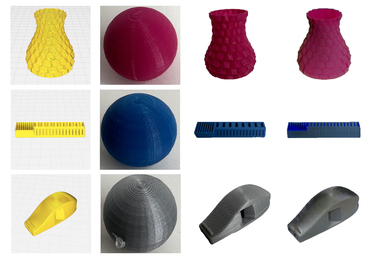
By quickly generating aesthetically accurate previews of fabricated objects, the VisiPrint system could make prototyping faster and less wasteful.
A new model measures defects that can be leveraged to improve materials’ mechanical strength, heat transfer, and energy-conversion efficiency.
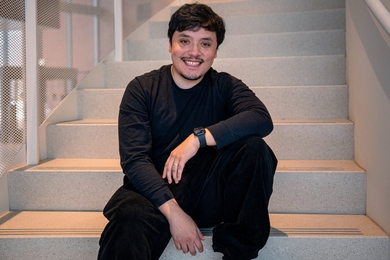
Mariano Salcedo ’25, a master’s student in the new Music Technology and Computation Graduate Program, is designing an AI to visualize and express music and other sounds.
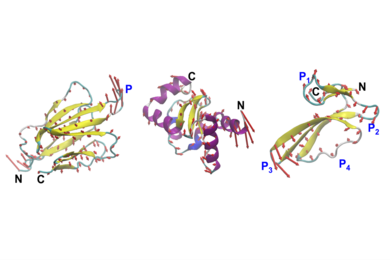
An AI model generates novel proteins based on how they vibrate and move, opening new possibilities for dynamic biomaterials and adaptive therapeutics.
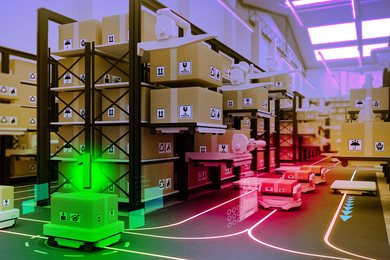
This new approach adapts to decide which robots should get the right of way at every moment, avoiding congestion and increasing throughput.