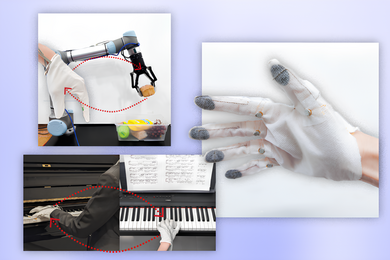
Adaptive smart glove from MIT CSAIL researchers can send tactile feedback to teach users new skills, guide robots with more precise manipulation, and help train surgeons and pilots.
MIT engineers developed a tag that can reveal with near-perfect accuracy whether an item is real or fake. The key is in the glue on the back of the tag.
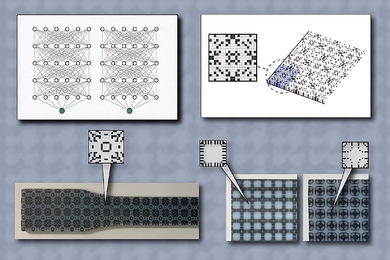
Innovative AI system from MIT CSAIL melds simulations and physical testing to forge materials with newfound durability and flexibility for diverse engineering uses.
Marc Baldo, Jacopo Buongiorno, and Hsiao-hua Burke, along with 13 additional MIT alumni, are honored for significant contributions to engineering research, practice, and education.
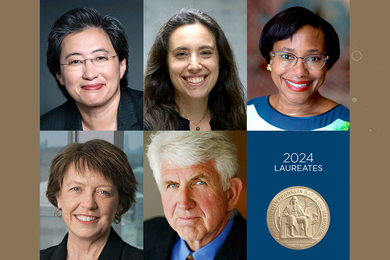
Two professors and three additional alumni recognized for “dreaming up solutions to global challenges — advancing health, sustainability, and human connection.”
Dermatologists and general practitioners are somewhat less accurate in diagnosing disease in darker skin, a new study finds. Used correctly, AI may be able to help.
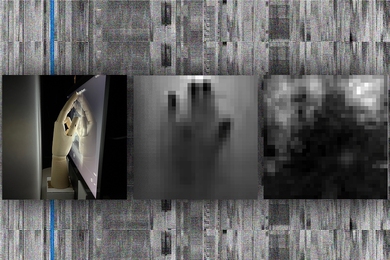
The ambient light sensors responsible for smart devices’ brightness adjustments can capture images of touch interactions like swiping and tapping for hackers.
Atacama Biomaterials, co-founded by Paloma Gonzalez-Rojas SM ’15, PhD ’21, combines architecture, machine learning, and chemical engineering to create eco-friendly materials.
Although artificial intelligence in health has shown great promise, pressure is mounting for regulators around the world to act, as AI tools demonstrate potentially harmful outcomes.