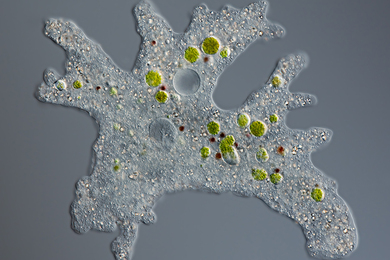
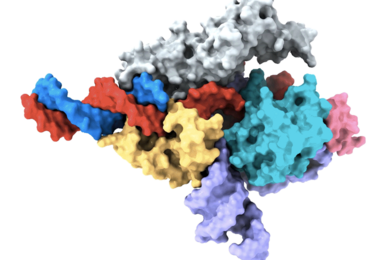
Researchers uncover a new CRISPR-like system in animals that can edit the human genome The first RNA-guided DNA-cutting enzyme found in eukaryotes, Fanzor could one day be harnessed to edit DNA more precisely than CRISPR/Cas systems. June 28, 2023 Read full story →
Daniel Anderson receives 2023 Wilhelm Exner Medal Award honors researchers who “have had a direct impact on business and industry through their scientific achievements and contributions.” May 22, 2023 Read full story →
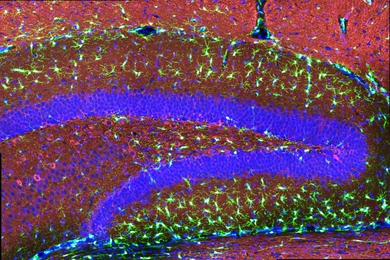
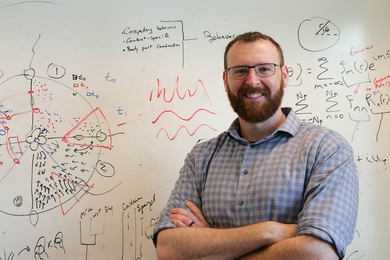
3 Questions: A new model of nervous system form, function, and evolution Developing a new neuroscience model is no small feat. New faculty member Brady Weissbourd has risen to the challenge in order to study nervous system evolution, development, regeneration, and function. May 22, 2023 Read full story →
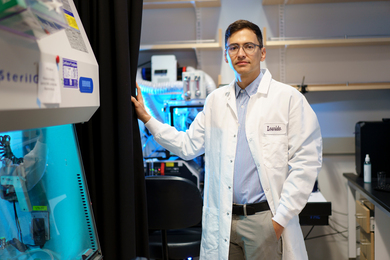
Gene-editing technique could speed up study of cancer mutations With the new method, scientists can explore many cancer mutations whose roles are unknown, helping them develop new drugs that target those mutations. May 11, 2023 Read full story →
A simple paper test could offer early cancer diagnosis The new diagnostic, which is based on analysis of urine samples, could also be designed to reveal whether a tumor has metastasized. April 25, 2023 Read full story →
Funding to Daniel Anderson’s lab will advance research on new delivery technology for RNA vaccines and therapies The global health care company Sanofi is providing $25 million to advance RNA research. April 11, 2023 Read full story →
New nanoparticles can perform gene editing in the lungs Using these RNA-delivery particles, researchers hope to develop new treatments for cystic fibrosis and other lung diseases. March 30, 2023 Read full story →
A new control switch could make RNA therapies easier to program Using this approach, researchers hope to deliver therapeutic RNA molecules selectively to cancer cells or other target cells. March 15, 2023 Read full story →
3 Questions: Cullen Buie on a new era for cell therapies The associate professor of MechE reflects on how his company, Kytopen, has grown and shifted focus in developing safer immunotherapies. February 3, 2023 Read full story →
MIT’s top research stories of 2022 Popular stories this year covered the detection of radio signals from space, a new battery design, immigrants’ entrepreneurial activity, and more. December 21, 2022 Read full story →
Koch Institute celebrates inaugural winners of the Angelika Amon Young Scientist Award Graduate students Alejandro Aguilera Castrejón and Melanie de Almeida honored for their passion for fundamental biology and discovery science. December 13, 2022 Read full story →
New CRISPR-based tool inserts large DNA sequences at desired sites in cells Known as PASTE, the technique holds potential for treating a variety of diseases caused by faulty genes. November 24, 2022 Read full story →
Scientists unveil the functional landscape of essential genes Researchers harness new pooled, image-based screening method to probe the functions of over 5,000 essential genes in human cells. November 21, 2022 Read full story →
Genome-wide screens could reveal the liver’s secrets A new technique for studying liver cells within an organism could shed light on the genes required for regeneration. November 15, 2022 Read full story →
A new control system for synthetic genes Researchers have developed a technique that could help fine-tune the production of monoclonal antibodies and other useful proteins. November 1, 2022 Read full story →