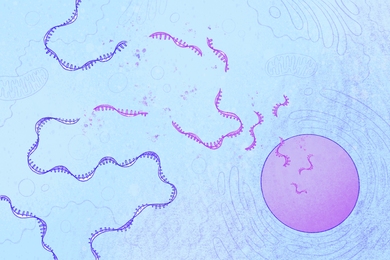
Research reveals how cells may activate a compensation system that can reduce the effects of harmful genetic mutations. This could inform gene therapy development.
Researchers developed an approach to study where proteins get made, and characterized proteins produced near mitochondria, gaining potential insights into mitochondrial function and disease.
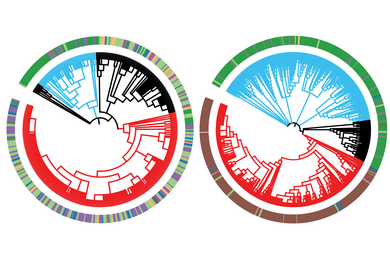
Researchers developed a tool to recreate cells’ family trees. Comparing cells’ lineages and locations within a tumor provided insights into factors shaping tumor growth.
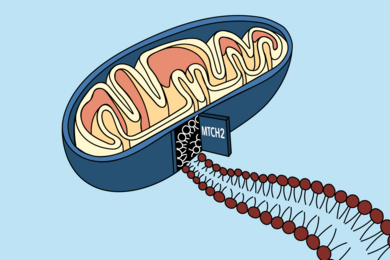
Study finds the protein MTCH2 is responsible for shuttling various other proteins into the membrane of mitochondria. The finding could have implications for cancer treatments and MTCH2-linked conditions.
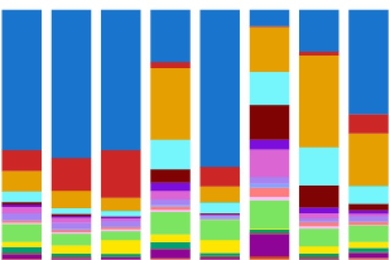
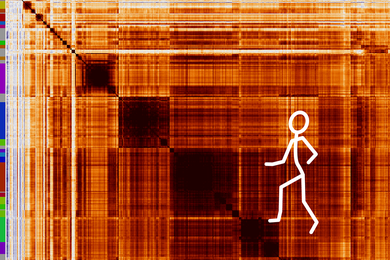
Jonathan Weissman and collaborators used their single-cell sequencing tool Perturb-seq on every expressed gene in the human genome, linking each to its job in the cell.