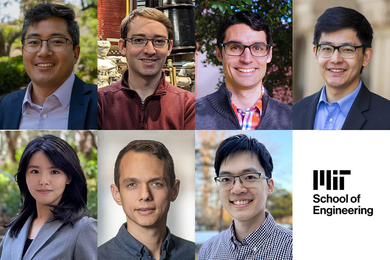
The MIT professors collaborated to identify the first AI-discovered antibiotic, a scientific breakthrough that is widely recognized as a milestone in AI-driven drug discovery.
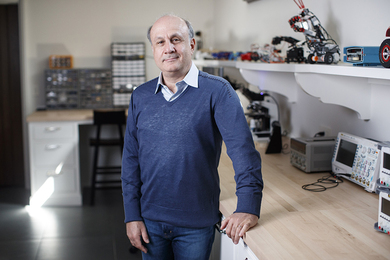
Professor Paris Smaragdis develops computers with superhuman hearing for applications like speech recognition, music understanding, and environmental monitoring.
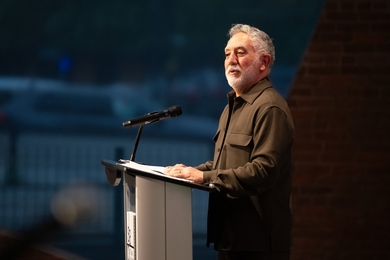
During a dozen years of leadership, Sarkis championed projects that advanced research, education, and public engagement, and helped design thrive at MIT.
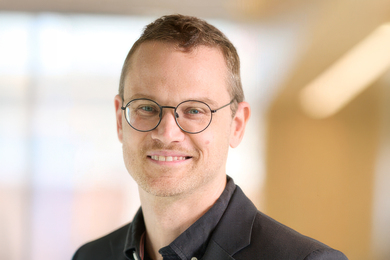
Assistant Professor Benjamin Lindquist studies how engineers deliberately injected randomness into early AI, giving rise to deep-learning models that sometimes hallucinate.
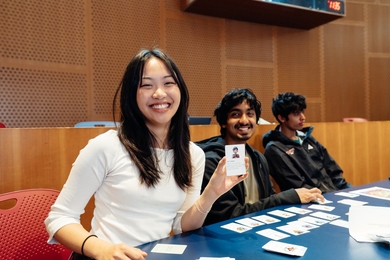
Students in MIT’s Concourse program delve deeply into the human condition, debate challenging questions, and learn to develop judgment about issues that can’t be quantified.
In a study focusing on hiring decisions, MIT researchers found the use of a single algorithm by many firms could benefit job seekers in certain situations.
Computer scientist, entrepreneur, and philanthropist will collaborate with the MIT Schwarzman College of Computing to advance AI and scientific discovery.
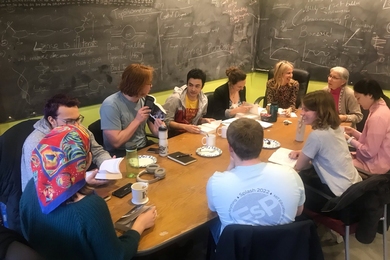
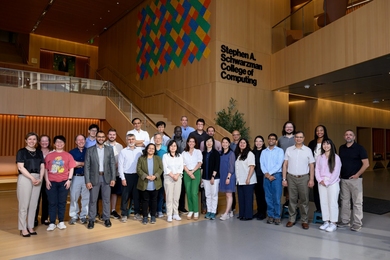
A weeklong summer workshop brought higher education faculty to campus to explore how AI and machine learning materials can be adapted for their classrooms.
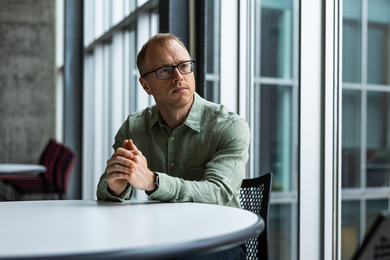
Philosopher Brian Hedden studies decision-making over time — and recently chose to return to alma mater MIT, where he is now connecting ethics and computing.