
Search Stories

Researchers develop virtual-reality testing ground for drones
With new system, drones navigate through an empty room, avoiding crashes while “seeing” a virtual world.
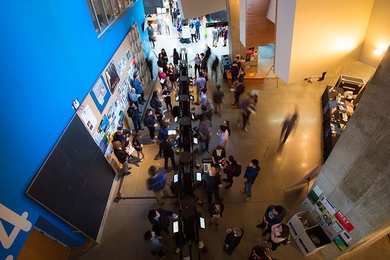
Showcasing the results of students' real-world research
SuperUROP and Masterworks participants share the findings of their intensive hands-on projects.
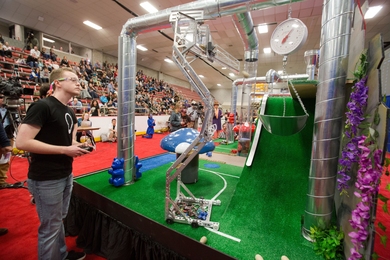
Students demonstrate "calculated imagination" in robot competition
Mechanical engineering students in class 2.007 battle for points in Willy Wonka-themed final robot competition.
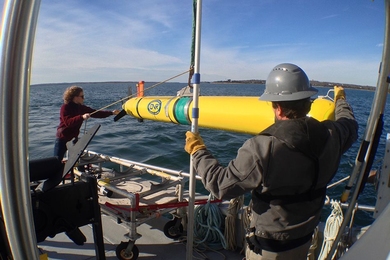
Fundamental equations guide marine robots to optimal sampling sites
New principled approach helps autonomous underwater vehicles explore the ocean in an intelligent, energy-efficient manner.
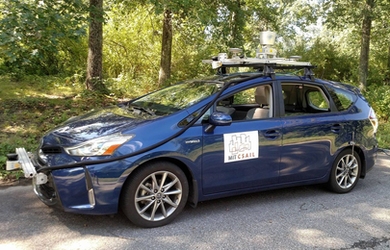
Self-driving cars for country roads
Today’s autonomous vehicles require hand-labeled 3-D maps, but CSAIL’s MapLite system enables navigation with just GPS and sensors.
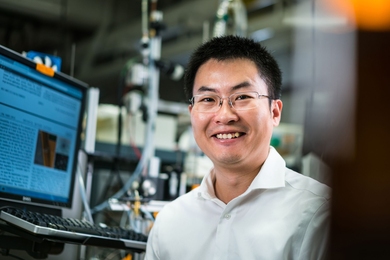
Deriving a theory of defects
Mingda Li seeks to harness atomic irregularities in materials for improved energy applications.

Three MIT graduate students awarded 2018 Paul and Daisy Soros Fellowships for New Americans
Award honors immigrants’ contributions to the United States.

Fluorescent dye could enable sharper biological imaging
Technique could allow doctors and researchers to generate clearer images of blood vessels and other tissues.

School of Engineering first quarter 2018 awards
Faculty members recognized for excellence via a diverse array of honors, grants, and prizes over the last quarter.

Ed Boyden receives 2018 Canada Gairdner International Award
MIT scientist is among three recognized for the discovery of optogenetics.

Cheetah III robot preps for a role as a first responder
Sangbae Kim is now developing the Cheetah III as a commercially viable robot to operate in compromised emergency response environments.
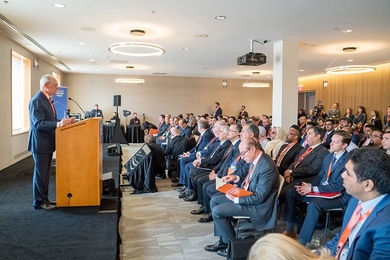
MIT hosts Saudi-U.S. innovation forum
Gathering focuses on spurring new directions for economic development.
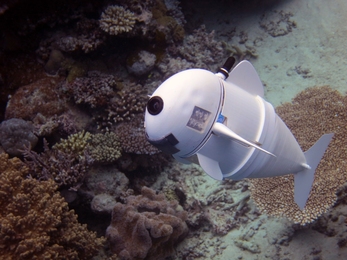
Soft robotic fish swims alongside real ones in coral reefs
Made of silicone rubber, CSAIL’s “SoFi” could enable a closer study of aquatic life.
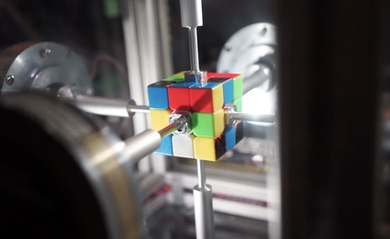
Featured video: Solving a Rubik's Cube in record time
A robot developed by MIT students Ben Katz and Jared Di Carlo can solve a Rubik’s Cube in a record-breaking 0.38 seconds.