Search Stories
MIT-USAID program releases evaluation of water filters
Study of water filters used in Indian homes assesses suitability, scalability, and sustainability.
Moderating extremes in building design
Leon Glicksman develops energy efficiency technologies and strategies for old and new buildings all over the world.
Messing with the monsoon
Study: Manmade aerosols can alter rainfall in the world’s most populous region.
MIT’s Public Service Center renamed to honor Priscilla King Gray
Co-founder of the PSC and wife of former MIT President Paul Gray has continued to guide the center’s work.
On the importance of academic international engagements: An interview with Fred Moavenzadeh
MIT professor and former president of the Masdar Institute reflects on a career spent fostering international research and teaching collaborations.
DUSP, CRE, and Samuel Tak Lee Lab welcome inaugural class of fellows
Graduate students arrive to study socially responsible real estate development and global urbanization.
Announcing MIT-SHASS new faculty for fall 2015
The School of Humanities, Arts, and Social Sciences welcomes a new group of standout scholars.
Saving rural India’s “liquid cash”
MIT spinout’s milk-chillers reduce spoilage and boost yields in villages.
India at the deep end
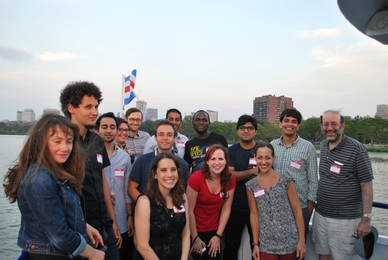
Incoming Tata Fellows get a crash course on resource-constrained communities and the challenges of the developing world.
Better estimates of worldwide mercury pollution
New findings show Asia produces twice as much mercury emissions as previously thought.
A cheaper, high-performance prosthetic knee
Researchers design cheap prosthetic knee that mimics normal walking motion.
Designing for flexibility
Richard de Neufville teaches and practices flexible engineering design for infrastructure projects that meet the challenges of the future.
Hamlin Jennings, Concrete Sustainability Hub principal investigator, dies at 68
A leader in the field of cement chemistry, Jennings developed the first fully quantitative model of the nanostructure of CSH, the major component of hydrated cement.
J-WAFS awards $1.8 million in first round of seed-grant funding
Nine grants of $200,000 for two years have been awarded to researchers from 11 MIT departments.