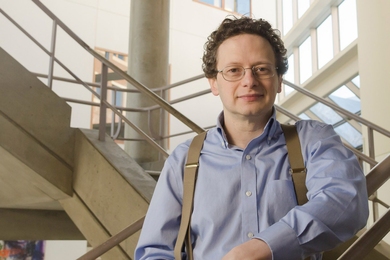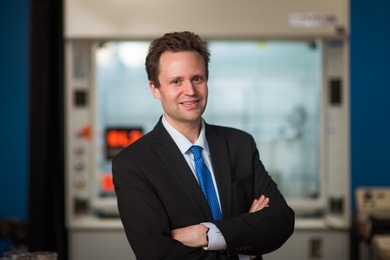
By designing new tools that can analyze huge libraries of immune cells and their targets, Michael Birnbaum hopes to generate better T cell therapies for cancer and other diseases.
Known for building connections between the social sciences, data science, and computation, the political science professor will lead IDSS into its next chapter.
MosaicML, co-founded by an MIT alumnus and a professor, made deep-learning models faster and more efficient. Its acquisition by Databricks broadened that mission.
The dedicated teacher and academic leader transformed research in computer architectures, parallel computing, and digital design, enabling faster and more efficient computation.
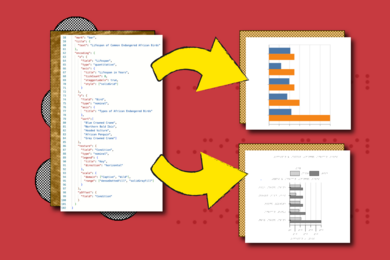
LLMs trained primarily on text can generate complex visual concepts through code with self-correction. Researchers used these illustrations to train an image-free computer vision system to recognize real photos.
The SPARROW algorithm automatically identifies the best molecules to test as potential new medicines, given the vast number of factors affecting each choice.
Leuko, founded by a research team at MIT, is giving doctors a noninvasive way to monitor cancer patients’ health during chemotherapy — no blood tests needed.
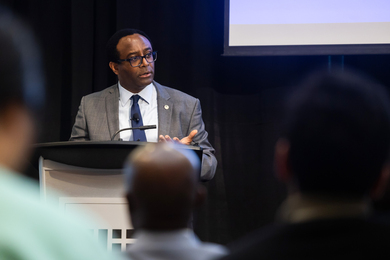
Co-hosted by the McGovern Institute, MIT Open Learning, and others, the symposium stressed emerging technologies in advancing understanding of mental health and neurological conditions.
DenseAV, developed at MIT, learns to parse and understand the meaning of language just by watching videos of people talking, with potential applications in multimedia search, language learning, and robotics.