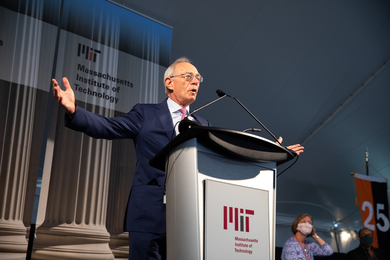
A former department head who established the MEng degree for EECS undergraduates, Penfield developed courses illuminating the equivalence of information and thermodynamic entropy.
Using an untapped resource, the Malden River Project is boosting social resilience along with climate mitigation in the gateway city of Malden, Massachusetts.