The MIT roots of Google’s new software
Google’s App Inventor, which lets people with no previous programming experience build applications for mobile phones, draws on decades of MIT research.
Google’s App Inventor, which lets people with no previous programming experience build applications for mobile phones, draws on decades of MIT research.
U.S. News and World Report ranks MIT Sloan’s undergraduate program second among peer institutions.
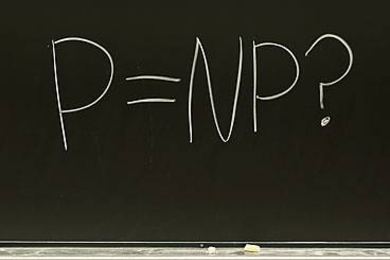
After glancing over a 100-page proof that claimed to solve the biggest problem in computer science, Scott Aaronson bet his house that it was wrong. Why?
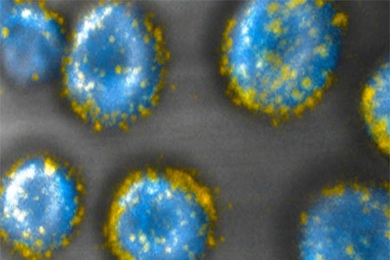
Drugs encapsulated in new MIT nanoparticles can hitch a ride to tumors on the surface of immune-system cells.
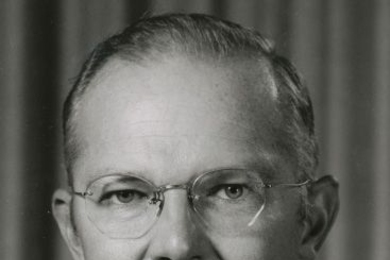
Worked on the atomic bomb at Los Alamos
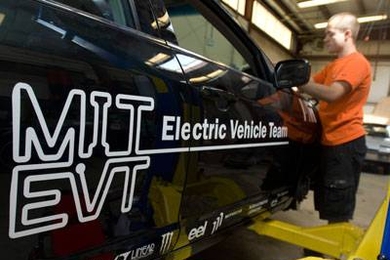
Ability to recharge rapidly could make electric cars more acceptable to consumers, says MIT student team

Internationally respected journal honors work from Institute, Lincoln Laboratory
Among 150 students nationwide awarded fellowships in program's first year
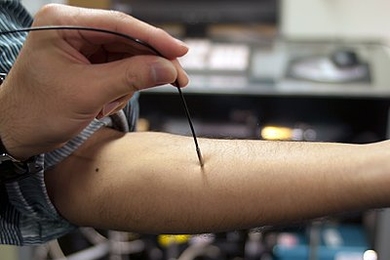
Device from MIT lab could help diabetic patients monitor their blood glucose levels without finger pricks.
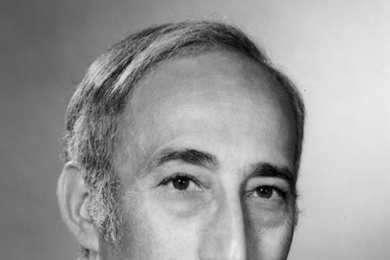
A Russian prison camp survivor, he worked at Lincoln Lab for 32 years and designed and built many laser systems still in use today.
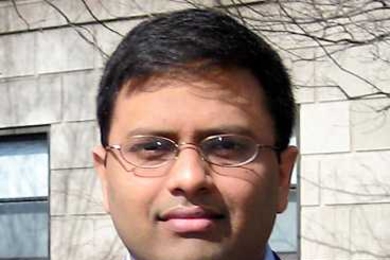
Funding will support research on nano-engineered surfaces for heat management that could make all sorts of systems work more efficiently
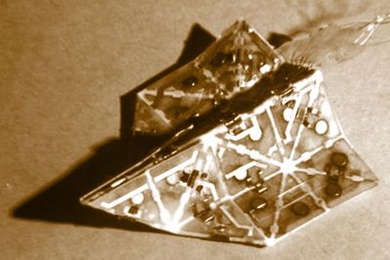
Self-folding sheets of a plastic-like material point the way to robots that can assume any conceivable 3-D structure.
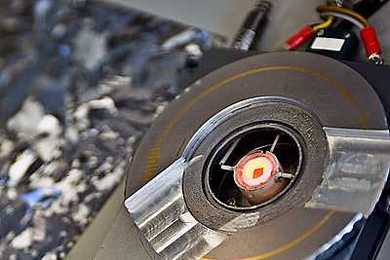
Material that shows melting while cooling might someday lead to applications in solar cells and other devices
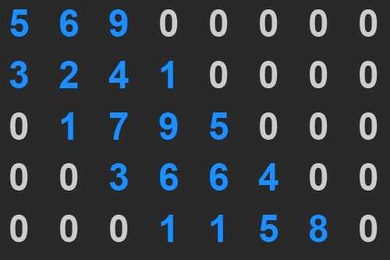
A new way of analyzing grids of numbers known as matrices could improve signal-processing applications and data-compression schemes.
Among 21 granted fellowships this year