The United States cannot take its position as the world leader of invention for granted, according to a new report prepared by the Lemelson-MIT Program with funding from the National Science Foundation. Authored by some of the nation's leading experts on invention, the report asserts that important sectors -- including government, business and education -- must actively foster inventiveness to safeguard the United State's innovative edge in an increasingly competitive global market.
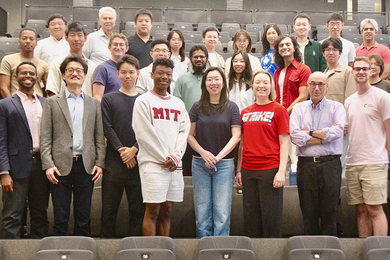
The Lemelson-MIT Program report, titled "Invention: Enhancing Inventiveness for Quality of Life, Competitiveness and Sustainability," will be released today (April 21) at noon at the National Press Club in Washington, D.C. The report will be presented for review and discussion at an Invention Assembly Friday at the National Academy of Engineering.
"It is increasingly possible and important today to leverage human ingenuity in the best interests of this nation and its people," said Merton C. Flemings, chair of the committee that produced the report. "The goal of our year-long investigation and Invention Assembly is to develop a multidisciplinary understanding of inventive ingenuity, of how it can be fostered in our youth, and how it can be applied to solving problems of our times."
The Invention Assembly will be a day-long conference featuring academics, decision-makers and business people who have examined the topic of invention from the perspectives of history, cognitive science, education, intellectual property law and sustainable development.