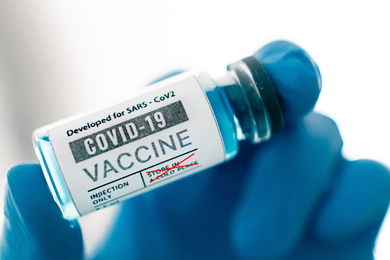
New formulation helps RNA vaccines withstand high temperatures
MIT engineers have found a way to stabilize the lipid nanoparticles used to deliver RNA vaccines, which could allow the vaccines to be more widely distributed.
MIT engineers have found a way to stabilize the lipid nanoparticles used to deliver RNA vaccines, which could allow the vaccines to be more widely distributed.
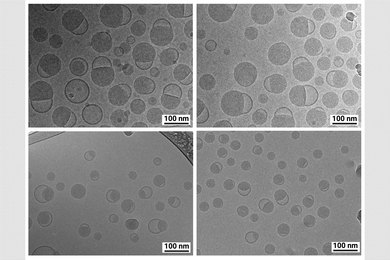
MIT chemical engineers found a way to rapidly produce lipid nanoparticles of varying sizes, which could make it easier to develop new vaccines and therapeutics.

From Boston to Moscow and across the U.S., Harriet Latham Robinson SM ’61, PhD ’65 has balanced an exciting career at the forefront of molecular biology with family, friends, and adventure.

Thomas Levenson’s new book shows how arguments against vaccination reach back to the beginning of the technology itself.

The adjuvant can help the injectable polio vaccine induce a strong immune response in the GI tract, which is considered critical to eradicating the virus.
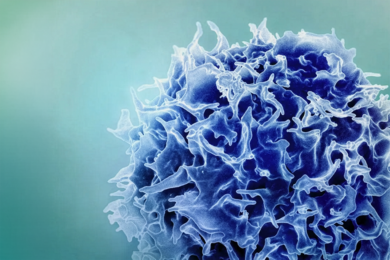
Using immune-remodeling mRNA molecules, researchers generated T cells that can slow tumor growth and, in some cases, eradicate tumors.
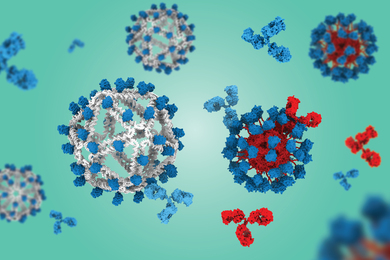
Based on a virus-like particle built with a DNA scaffold, the approach could generate broadly neutralizing antibody responses against HIV or influenza.
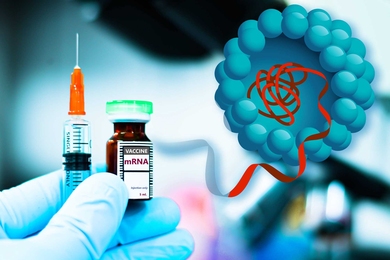
Using these nanoparticles to deliver a flu vaccine, researchers observed an effective immune response at a much lower dose.
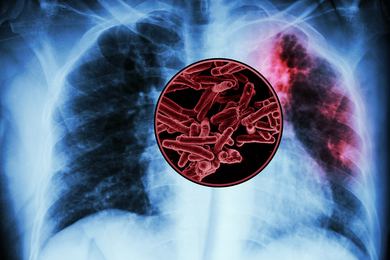
Using these antigens, researchers plan to develop vaccine candidates that they hope would stimulate a strong immune response against the world’s deadliest pathogen.

Professors Facundo Batista and Dina Katabi, along with three additional MIT alumni, are honored for their outstanding professional achievement and commitment to service.

VaxSeer uses machine learning to predict virus evolution and antigenicity, aiming to make vaccine selection more accurate and less reliant on guesswork.

MIT engineers used a machine-learning model to design nanoparticles that can deliver RNA to cells more efficiently.

By delivering an HIV vaccine candidate along with two adjuvants, researchers showed they could generate many more HIV-targeting B cells in mice.

One combination of methods led to a 44 percent increase in child immunizations.
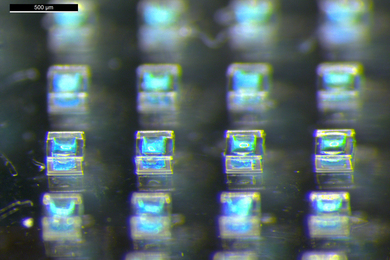
MIT engineers designed polymer microparticles that can deliver vaccines at predetermined times after injection.