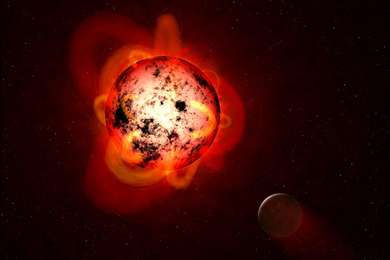
TESS discovers a planet the size of Mars but with the makeup of Mercury
The boiling new world, which zips around its star at ultraclose range, is among the lightest exoplanets found to date.
The boiling new world, which zips around its star at ultraclose range, is among the lightest exoplanets found to date.
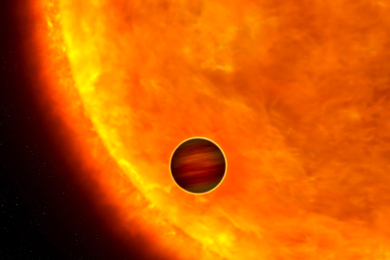
A newly discovered “ultrahot Jupiter” has the shortest orbit of any known gas giant.
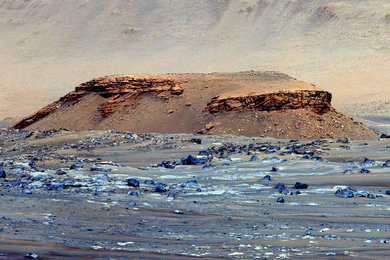
The findings include signs of flash flooding that carried huge boulders downstream into the lakebed.
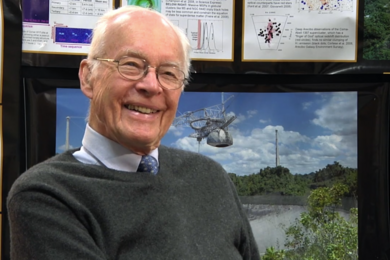
Planetary physicist and former director of the MIT Center for Space Research and the Arecibo Observatory helped repurpose military radar technology for science and space exploration.

Thanks to an MIT-designed instrument, a NASA mission has produced oxygen on another planet for the first time.
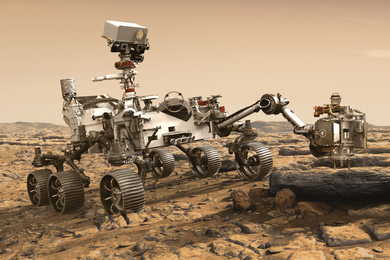
Following touchdown, MOXIE will brew up oxygen while geologists comb for sediments to sample.
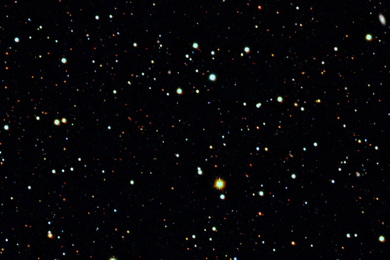
Findings suggest the first galaxies in the universe were more massive than previously thought.
Results significantly narrow the range of possible places to find the hypothetical dark matter particles.

As part of NASA’s Mars 2020 mission, Professor Tanja Bosak helps determine the best samples to bring home for clues about life 4 billion years ago.
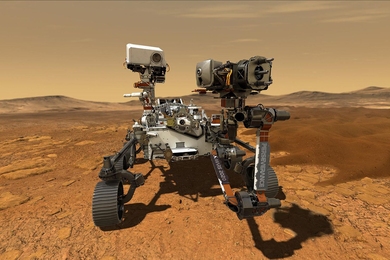
Led by MIT researchers, one of the experiments aboard the next mission to the Red Planet aims to generate oxygen from Martian air.
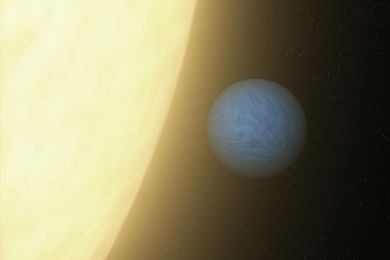
When searching for extraterrestrial life, astronomers may want to look at planets with hydrogen-rich atmospheres.

To help us navigate this time of social distancing, three MIT astronauts share lessons of isolated living aboard the International Space Station.

With “In Event of Moon Disaster,” the MIT Center for Advanced Virtuality aims to educate the public on deepfakes with an alternative history of the moon landing.
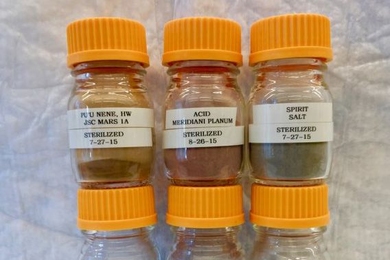
Scientists from the Search for Extra-Terrestrial Genomes instrument team develop method to detect the tiniest traces of life on other planetary bodies.

Multilevel Mars greenhouse could provide food to sustain astronauts for several years.