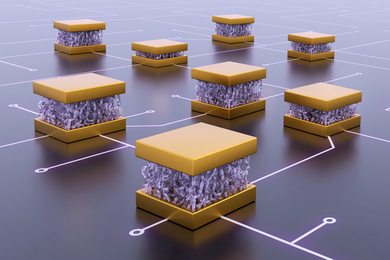
Nanoscale mechanics could enable brain-inspired computing
A new device uses reconfigurable motion to mimic the firing behavior of a neuron, which could lead to more efficient computing.
A new device uses reconfigurable motion to mimic the firing behavior of a neuron, which could lead to more efficient computing.

The work is part of a multiyear effort to develop a distributed sensor network for relaying data collected from this critical region.

A new, scalable technique could enable powerful radars and sensors based on quantum technology that works at room temperature.
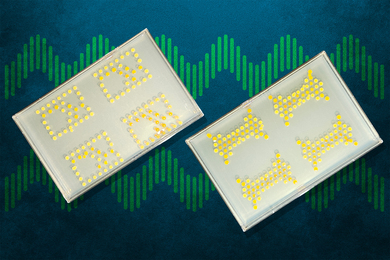
By wiring together colonies of these bacteria, the researchers built circuits that can perform complicated calculations.
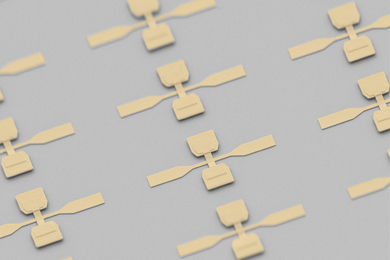
A new fabrication platform integrates molecules into electronic devices, opening the door to emerging computing technologies.
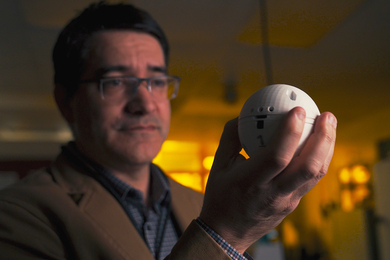
The “TOSSIT” device, developed at MIT Lincoln Laboratory, can warn service members and first responders of dangerous vapors and aerosols.
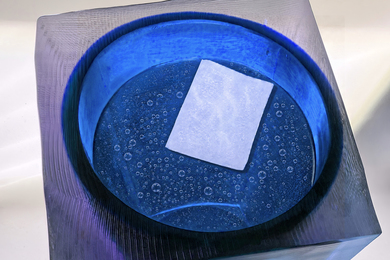
The new aerated material could enable longer-lasting bandages, implants, and wearable sensors.
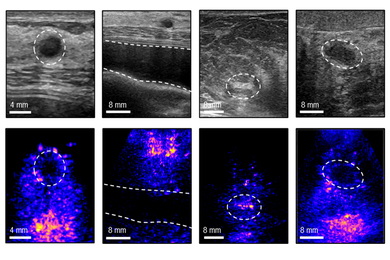
The new technology, which generates high-resolution, 3D images of breast tissue, requires no expertise to operate and could be used at home.
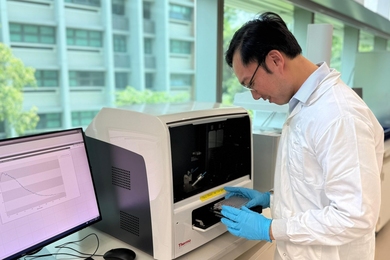
Researchers developed an optical nanosensor to rapidly detect a key gut biomarker, enabling faster, accessible screening.
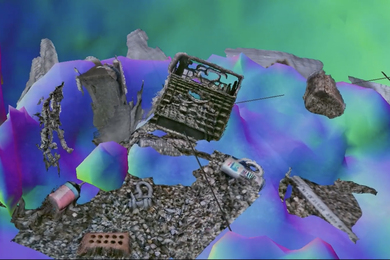
The “Sonar-MASt3R” combines sonar and visual data to create real-time 3D maps, even in cloudy water.
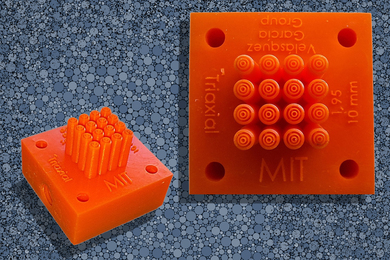
The cost-effective devices, which can be built in hours, leverage electrospray emitter technology to efficiently produce three-layered particles at scale.
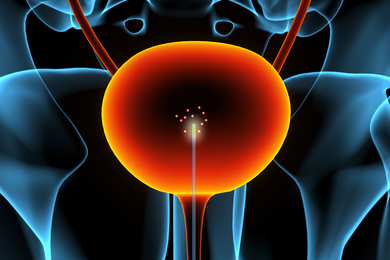
Using a catheter coated with carbon nanotubes, researchers can detect biomarkers produced by cancer cells in the bladder.
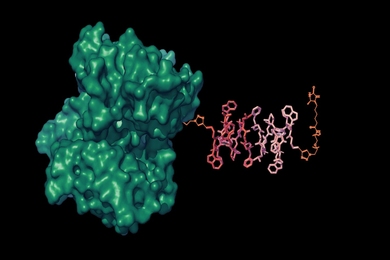
New MRI sensors developed at MIT sensitively detect target molecules in the brain and body.
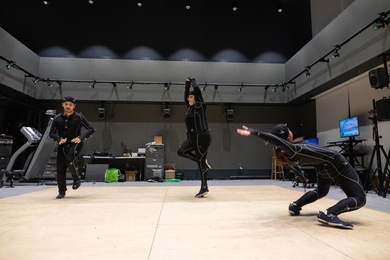
MIT.nano Immersion Lab collaborates with Emerson College students to advance the art of virtual production.
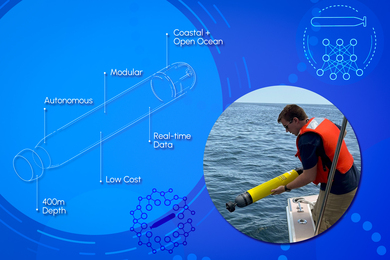
Founded by Ravi Pappu SM ’95, PhD ’01, Apeiron Labs is deploying low-cost ocean sensors to improve storm forecasts, detect endangered species, and more.