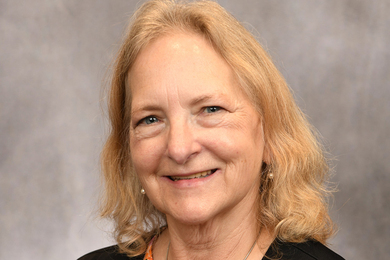
Anthea Coster awarded International Union of Radio Science Appleton Prize
The MIT Haystack Observatory principal research scientist is honored for lifetime contributions to ionospheric research.
The MIT Haystack Observatory principal research scientist is honored for lifetime contributions to ionospheric research.
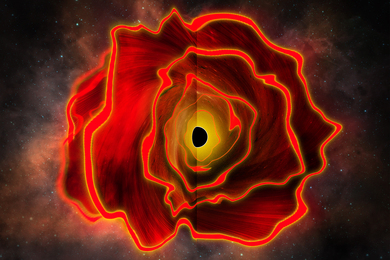
The mashup of a black hole and an enormous star has never been seen before and could explain the mysterious little red dots often found in deep-space images.
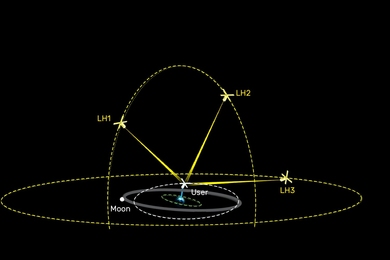
Acting as cooperative optical beacons, the satellites could provide GPS-like navigation and communications support for spacecraft operating across cislunar space.
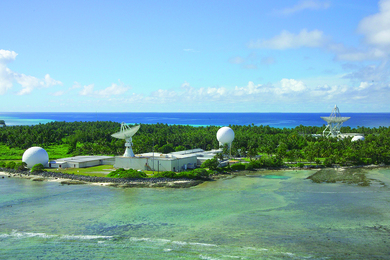
Members of the laboratory community reflect on technology impacts that shaped the United States and the world over the past 75 years.
The 1967 Outer Space Treaty bans nuclear weapons in space, but there’s currently no way to verify that satellites aren’t carrying them.
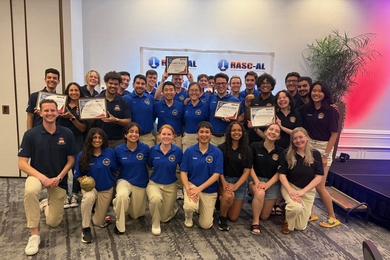
Three MIT teams took five top awards in the 2026 NASA RASC-AL Competition for designing critical elements for the moon base and future missions to Mars.
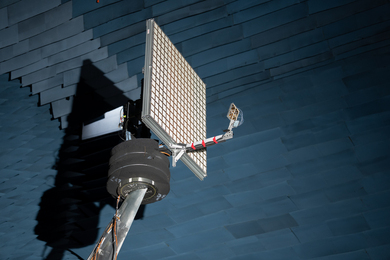
The prototype array uses a small, lightweight, low-power, and low-cost aperture.
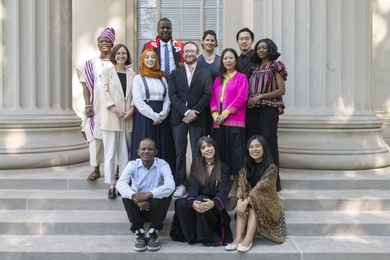
As the international program approaches its 60th year, leaders are reshaping its curriculum to address emerging technologies and the policies shaping their use in urban planning.
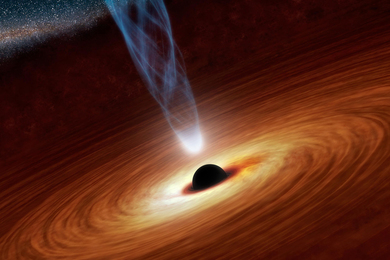
When the universe was just 850 million years old, this voracious black hole was already surprisingly mature, a new study finds.
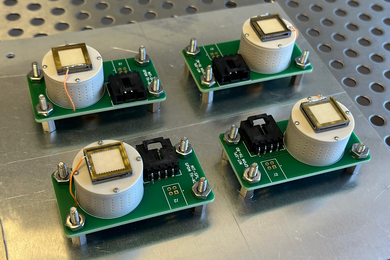
For satellites as small as a briefcase, getting around in space just got a whole lot easier.
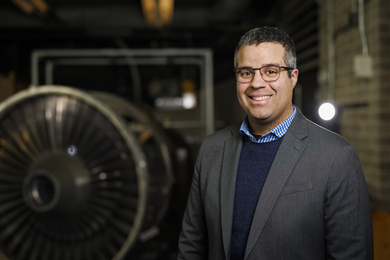
Associate Professor Richard Linares is helping satellites safely navigate in increasingly congested orbits.
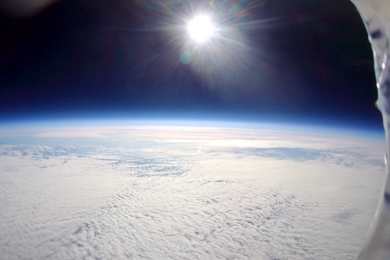
MIT students see the Earth's curvature in reborn AeroAstro intro course.
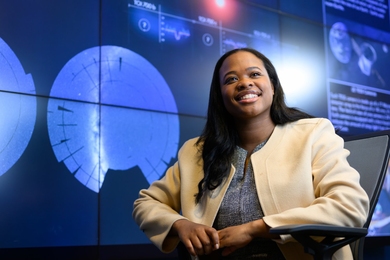
PhD student Carissma McGee studies exoplanets and examines intellectual property frameworks for space collaborations.
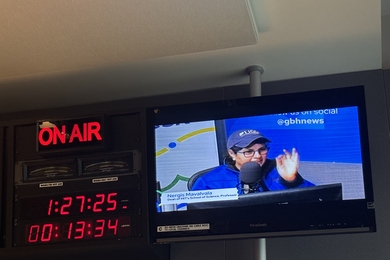
On GBH’s new show The Curiosity Desk, MIT LIGO researchers revel in the beauties of fundamental discovery science and MIT astronomers talk planetary defense.
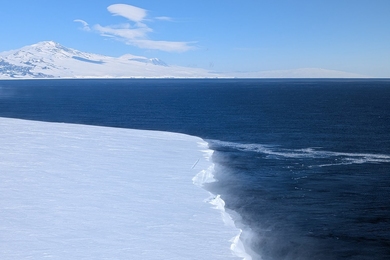
Observations suggest a major melting event at the Ross Ice Shelf was connected to atmospheric turbulence.