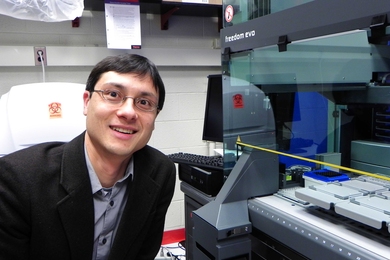
Temkin named IEEE Plasma Science and Applications Award winner
Richard J. Temkin cited for contributions to the field of high power gyrotrons and their applications
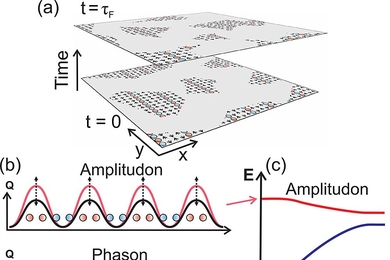
A new look at high-temperature superconductors
Method allows direct detection of rapid fluctuations that may help to explain how high-temperature superconducting materials work.
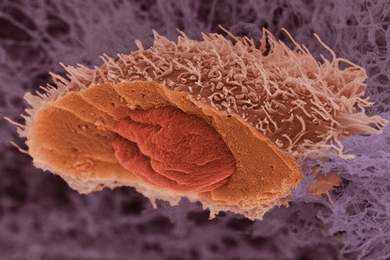
Some cancer mutations slow tumor growth
Surprising result suggests that enhancing these mutations’ impact could offer a new way to treat cancer.
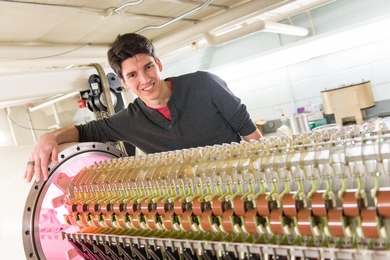
Undergraduate contributes to fusion reactor advancement
Jake Jurewicz, a nuclear science and engineering-physics double major, received a fellowship to develop new simulation and visualization software at the National Fusion Facility in California.
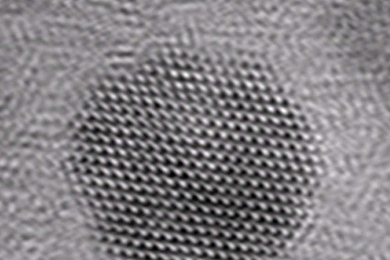
MIT researchers improve quantum-dot performance
New production method could enable everything from more efficient computer displays to enhanced biomedical testing.
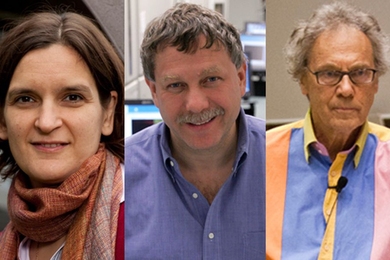
Duflo, Lander, Lewin to lead spring-semester MITx courses
EdX takes stock of last semester’s MITx courses; data will be used to improve education online and in the classroom.
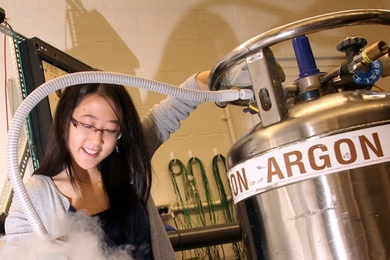
A physicist and her neutrinos
MIT senior Christie Chiu has found her focus: the study of tiny particles.
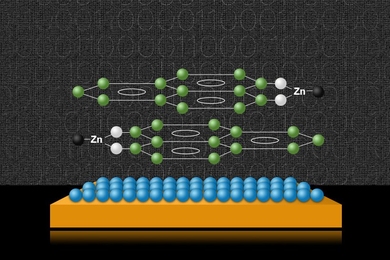
Storing data in individual molecules
An international team of researchers demonstrates the possibility of molecular memory near room temperature.
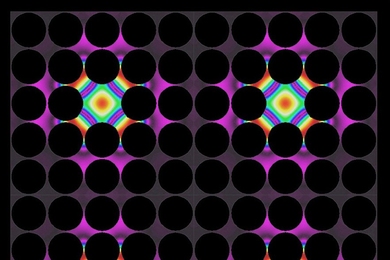
How to treat heat like light
New approach using nanoparticle alloys allows heat to be focused or reflected just like electromagnetic waves.
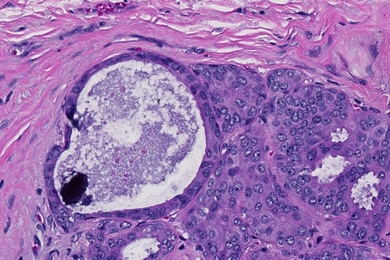
Improving the accuracy of cancer diagnoses
New spectroscopy technique could help doctors better identify breast tumors.
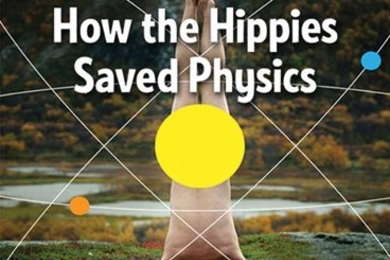
Historian/physicist David Kaiser wins Physics World’s 'Book of the Year Award'
Kaiser is the head of MIT's Program in Science, Technology, and Society, and a senior lecturer in the Department of Physics.
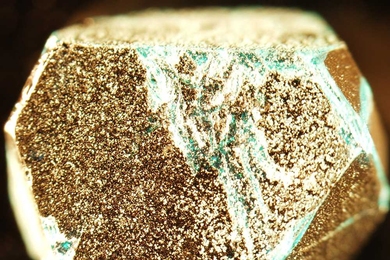
MIT researchers discover a new kind of magnetism
Experiments demonstrate ‘quantum spin liquid,’ which could have applications in new computer memory storage.
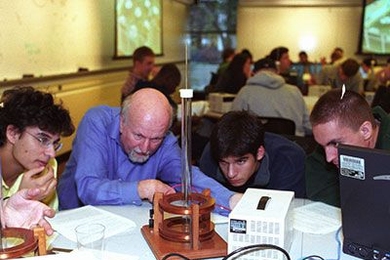
Physics receives 2012 APS award for improving undergraduate physics education
One of four institutions recognized
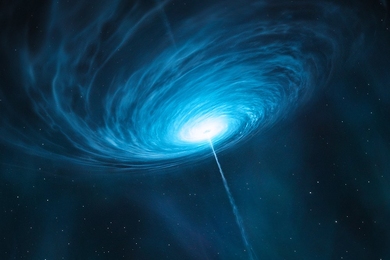
When the first stars blinked on
The very first stars may have turned on when the universe was 750 million years old.