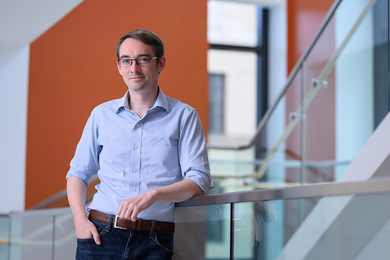
Addressing nuclear challenges, from radiation detection to power in space
Assistant Professor Jake Hecla is developing tools to cool space-based reactors, detect the presence of nuclear weapons, and better understand emerging nuclear technologies.
Assistant Professor Jake Hecla is developing tools to cool space-based reactors, detect the presence of nuclear weapons, and better understand emerging nuclear technologies.
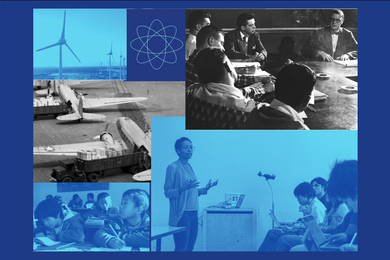
For 75 years, the Center for International Studies has brought together social scientists, engineers, and practitioners to understand global change, shape public debate, and address generational challenges.
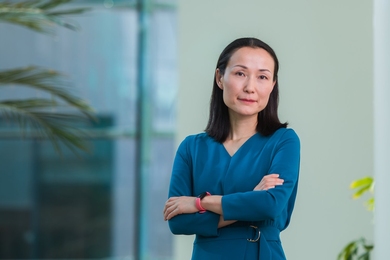
Professor Haruko Wainwright believes the risks posed by radioactive wastes cannot be properly assessed without also considering the hazards of chemical wastes.
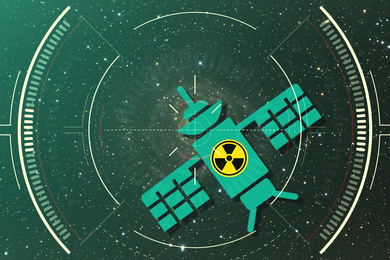
The 1967 Outer Space Treaty bans nuclear weapons in space, but there’s currently no way to verify that satellites aren’t carrying them.
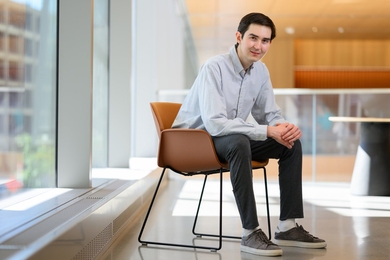
Nuclear waste continues to be a bottleneck in the widespread use of nuclear energy, so doctoral student Dauren Sarsenbayev is developing models to address the problem.

A new study by MIT researchers analyzes different nuclear waste management strategies, with a focus on the radionuclide iodine-129.

MIT political scientist Caitlin Talmadge scrutinizes military postures and international dynamics to understand the risks of escalation.

The simulations matched results from an underground lab experiment in Switzerland, suggesting modeling could be used to validate the safety of nuclear disposal sites.
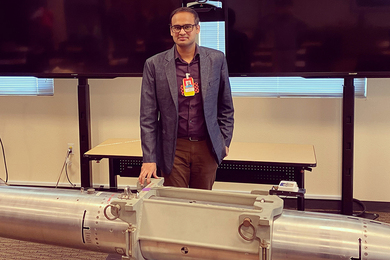
Political science PhD student Kunal Singh identifies a suite of strategies states use to prevent other nations from developing nuclear weapons.

After an illustrious career at Idaho National Laboratory spanning three decades, Curtis Smith is now sharing his expertise in risk analysis and management with future generations of engineers at MIT.
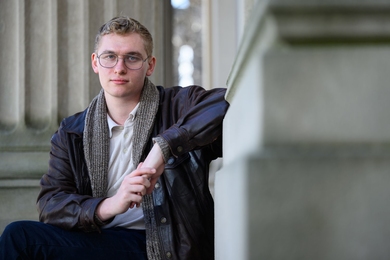
Today’s regulations for nuclear reactors are unprepared for how the field is evolving. PhD student Liam Hines wants to ensure that policy keeps up with the technology.
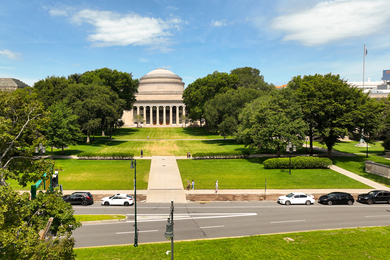
With $45 million in support from the Stanton Foundation, the program will expand its longstanding leadership in a critical area of global security.
Rising superpowers like China are “cautious opportunists” in global institutions, and the U.S. should avoid overreaction, PhD student Raymond Wang argues.

As part of his MIT doctoral studies in nuclear science and engineering, Eli Sanchez investigated whether hypersonic missiles threaten global security.

Work by MIT engineers could lead to plethora of new applications, including better detectors for nuclear materials at ports.