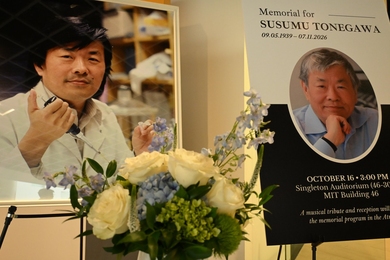
Mentees, colleagues, friends share remembrances of Susumu Tonegawa
To remember the longtime professor, lab members, alumni, colleagues, and other well-wishers gathered with members of his family in MIT Building 46 and online.
To remember the longtime professor, lab members, alumni, colleagues, and other well-wishers gathered with members of his family in MIT Building 46 and online.
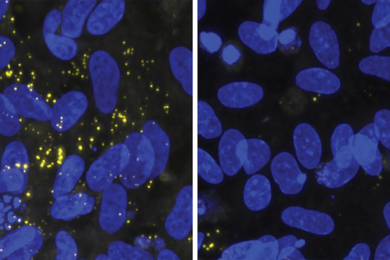
MIT researchers showed that the APOE4 gene variant suppresses molecular signaling needed for oligodendrocytes to myelinate neurons and also demonstrated a proof-of-concept fix.
The brain's ability to generate quick, nimble volitional thought — and a unified awareness of thought and experience — arises from analog computations, MIT neuroscientists argue in a new review.
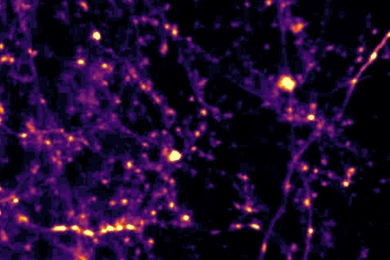
To keep track of what’s going on in front of it, the brain relies not only on what it sees, but also a comparison with what it just saw. A new study pinpoints the circuit that provides that service.

Neuroscientists have discovered circuits in the prefrontal cortex that can be repurposed to store different types of information.
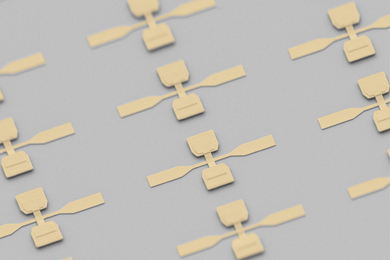
A new fabrication platform integrates molecules into electronic devices, opening the door to emerging computing technologies.
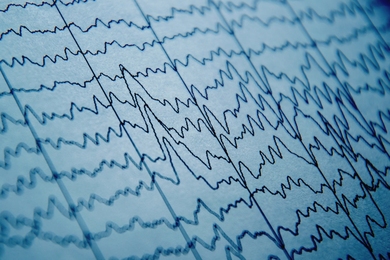
A new study adds evidence that electric fields in the brain help to organize and shape underlying neural activity via “ephaptic coupling.”
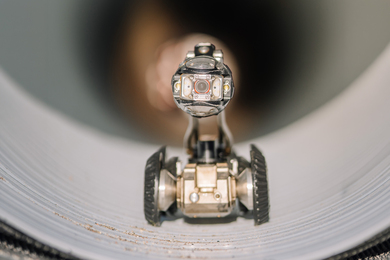
Researchers combined an efficient algorithm with dedicated hardware to rapidly generate 3D maps for navigation using minimal memory and power.
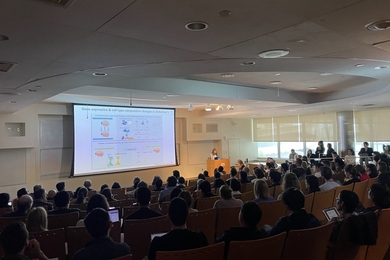
Speakers at MIT’s Aging Brain Initiative symposium described how immune system factors during aging contribute to Alzheimer’s, Parkinson’s and other conditions. The field is leveraging that knowledge to develop new therapies.

A new device concept opens the door to compact, high-performance transistors with built-in memory.
Study of 3.5 million cells from more than 100 human brains finds Alzheimer’s progression — and resilience to disease — depends on preserving epigenomic stability.
MIT researchers developed a new model of memory that includes critical contributions from astrocytes, a class of brain cells.
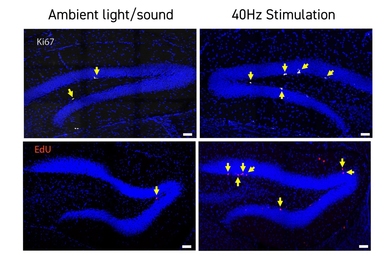
New evidence suggests sensory stimulation of gamma-frequency brain rhythm may promote broad-based restorative neurological health response.
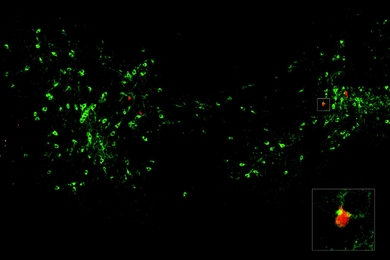
Study shows how a dopamine circuit enables mice to extinguish fear after a peril has passed, opening new avenues for understanding and potentially treating fear-related disorders.
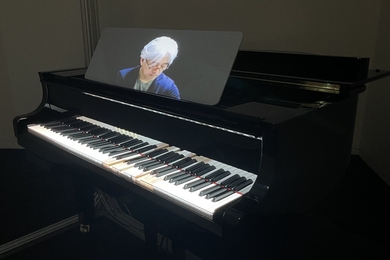
MIT researchers lay out design principles behind the TeleAbsence vision, how it could help people cope with loss and plan for how they might be remembered.