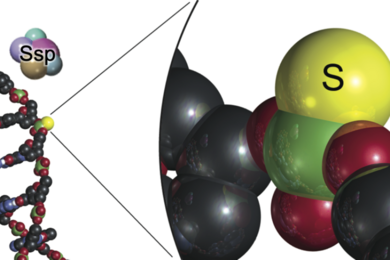
SMART researchers uncover new anti-phage defense mechanisms
Discovery explains why some bacteria have been able to defend against phage therapy, opens new ways to overcome existing challenges.
Discovery explains why some bacteria have been able to defend against phage therapy, opens new ways to overcome existing challenges.
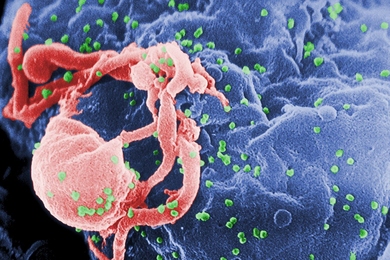
Differently shaped RNA molecules allow HIV to express different genes from the same RNA sequence.

MIT economist Pierre Azoulay outlines a roadmap for scientific success against the virus.
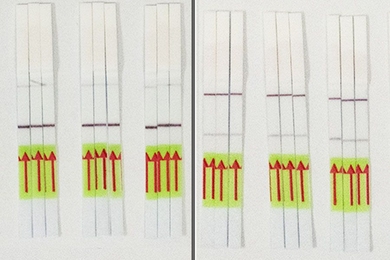
New CRISPR-based research tool delivers results in an hour; researchers share protocol and kits to advance research and move toward clinical validation.

“We volunteered because we thought it would be a great opportunity to give back to the MIT community in a time of necessity,” says Nathan Han.

MIT professor and intensivist/trauma surgeon explains the new challenges that Covid-19 brings to treating patients in acute respiratory distress.
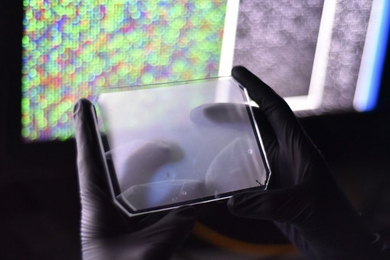
Diagnostic platform CARMEN combines microfluidics with CRISPR-based detection technology SHERLOCK, and could one day be used for public health efforts.

At MIT, senior Tarun Kamath has explored neuroscience and science policy, while helping his peers find ways to reduce stress.
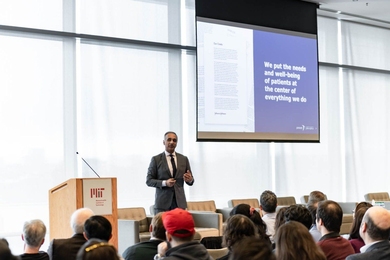
Inaugural AI Powered Drug Discovery and Manufacturing Conference drew pharmaceutical companies, government regulators, and pioneering drug researchers.
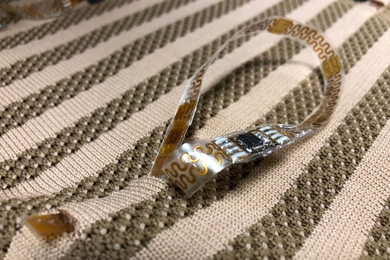
Comfortable, form-fitting garments could be used to remotely track patients’ health.
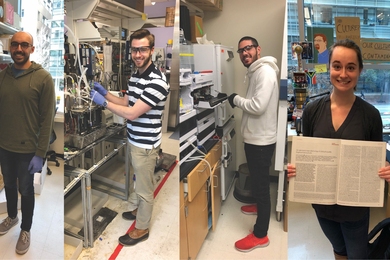
Manufacturability is key to producing a widely available, affordable vaccine.
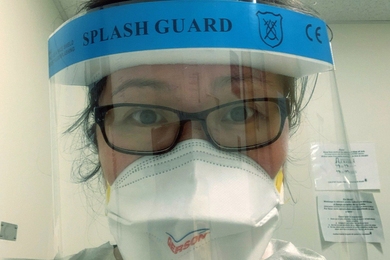
Neurologist and researcher Diane Chan pitches in to help New England get through tough times.
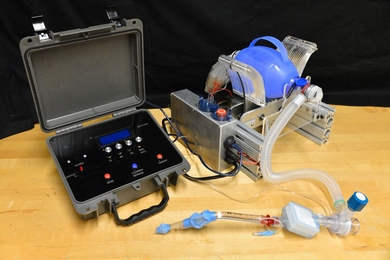
An ad hoc team of engineers and doctors has developed a low-cost, open-source alternative, now ready for rapid production.
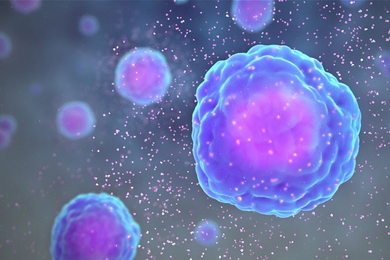
Team designs antibody-like receptor proteins that can bind to cytokines, as possible strategy for treating coronavirus and other infections.
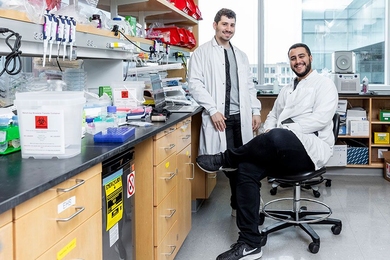
MIT scientists Omar Abudayyeh and Jonathan Gootenberg explain the current state of Covid-19 testing, and how a CRISPR tool may help solve the supply problem.