
At MIT, Nobel laureate Frances Arnold describes innovation by evolution
In the Hoyt C. Hottel Lecture, Arnold tells the story of her pathbreaking research to engineer better enzymes for critical applications.
In the Hoyt C. Hottel Lecture, Arnold tells the story of her pathbreaking research to engineer better enzymes for critical applications.

Professors Linda Griffith and Feng Zhang along with Guillermo Ameer ScD ’99, Darrell Gaskin SM ’87, William Hahn, and Vamsi Mootha recognized for contributions to medicine, health care, and public health.

A new study finds cutting off cells’ supplies of lipids can slow the growth of tumors in mice.
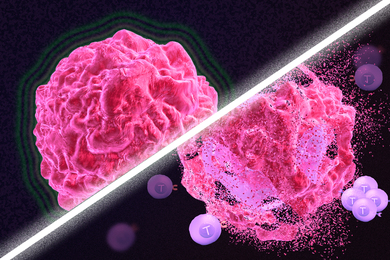
By combining chemotherapy, tumor injury, and immunotherapy, researchers show that the immune system can be re-engaged to destroy tumors in mice.

While the brain acquires resistance to continuous treatment with mGluR5 inhibitor drugs, lasting effects may still arise if dosing occurs intermittently and during a developmental-critical period.

Cardiologist Demilade Adedinsewo is using her MIT Professional Education experience to advance cardiovascular care at the Mayo Clinic.

Secure AI Labs, founded by alumna Anne Kim and MIT Professor Manolis Kellis, anonymizes data for AI researchers.
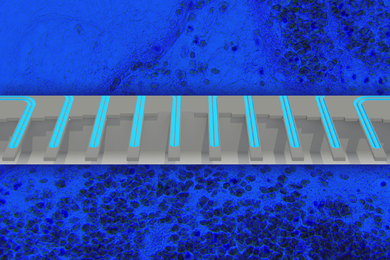
A new study shows a link between patient survival and changes in tumor cell mass after glioblastoma treatment.
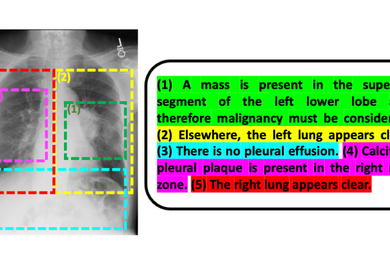
Scientists employ an underused resource — radiology reports that accompany medical images — to improve the interpretive abilities of machine learning algorithms.

Neural network identifies synergistic drug blends for treating viruses like SARS-CoV-2.

An AI-enhanced system enables doctors to spend less time searching for clinical information and more time treating patients.

Neuroscientists at MIT and Massachusetts General Hospital develop a statistical framework that describes brain-state changes patients experience under ketamine-induced anesthesia.
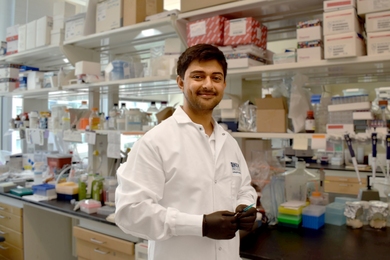
Sachin Bhagchandani wins NCI Predoctoral to Postdoctoral Fellow Transition (F99/K00) Award.
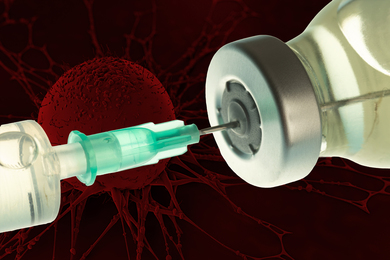
Vaccinating against certain proteins found on cancer cells could help to enhance the T cell response to tumors.

Public-private partnership aims to advance development and production of medical treatments.