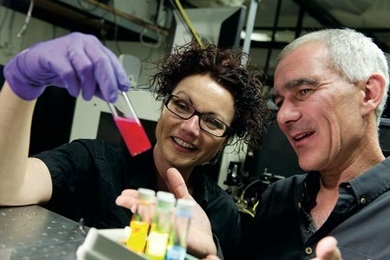
Capturing energy from the sun
MIT investigators are inspired by a deep-sea bacterium that is able to harvest tiny amounts of incoming solar energy with exquisite efficiency.
MIT investigators are inspired by a deep-sea bacterium that is able to harvest tiny amounts of incoming solar energy with exquisite efficiency.
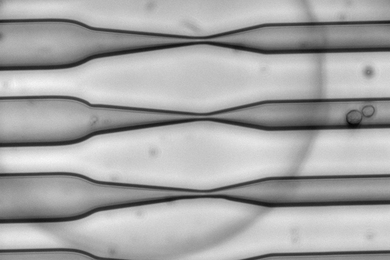
By deforming cells, researchers can deliver RNA, proteins and nanoparticles for many applications.
Program aims to help students gain perspective on new methodologies, improve overall research skills.
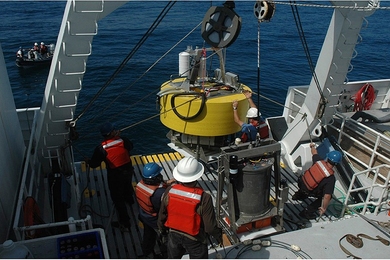
Scientists track ocean microbe populations in their natural habitat to create a ‘day in the life’ montage.
Ceramic forms of hydrophobic materials could be far more durable than existing coatings or surface treatments.

Over three days in December, four research groups announced progress on a quantum-computing proposal made two years ago by MIT researchers.

Mutant forms of the gene disrupt chemical modifications that control access to genes necessary for normal brain cell function.
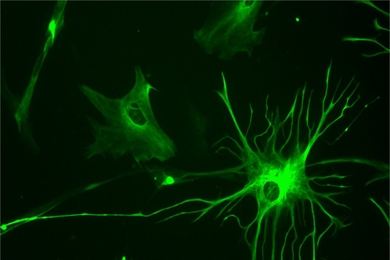
Discovery that some seizures arise in glial cells could offer new targets for epilepsy treatment.
Students will blog and tweet about their experiences in Geneva, Switzerland.
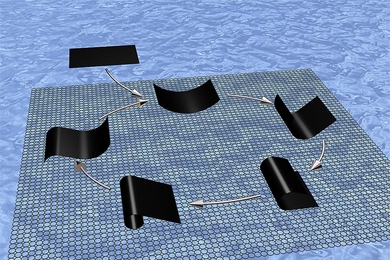
Polymer film could be used in artificial muscle and to power micro- and nanoelectronic devices.

Record-setting ‘optical phased arrays’ could lead to better laser rangefinders, smaller medical-imaging devices and even holographic TVs.

A new algorithm for message dissemination in decentralized networks is faster than its predecessors but, unlike them, guarantees delivery.
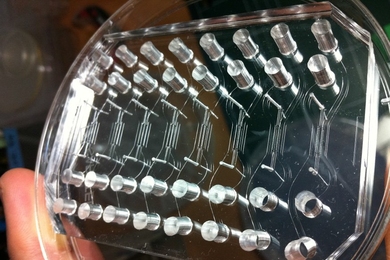
MIT researchers are designing tools to analyze cells at the microscale.

MIT Professor Fiona Murray produces concrete guidelines on designing and executing Grand Innovation Prizes.
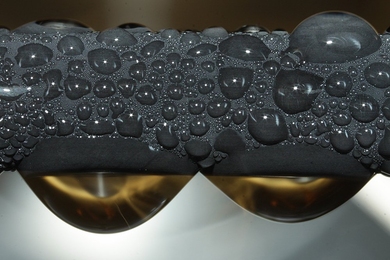
Scalable nanopatterned surfaces designed by MIT researchers could make for more efficient power generation and desalination.