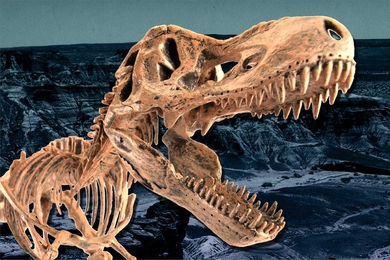

Measuring the migration of a river
MIT researchers calculate river networks’ movement across a landscape.

An extinction in the blink of an eye
MIT researchers find that the end-Permian extinction happened in 60,000 years — much faster than earlier estimates.

Researchers use ocean waves to predict seismic shaking in Southern California
Results show a rupture of the San Andreas Fault could generate three times more shaking in Los Angeles than surrounding regions.

Study faults a ‘runaway’ mechanism in intermediate-depth earthquakes
Researchers find immense heating at high pressures helps spread intermediate-depth quakes.

Grove awarded Geochemical Society's Goldschmidt Award
EAPS professor Timothy L. Grove has been named a Goldschmidt Medalist by the Geochemical Society for his contributions to Earth and planetary research.
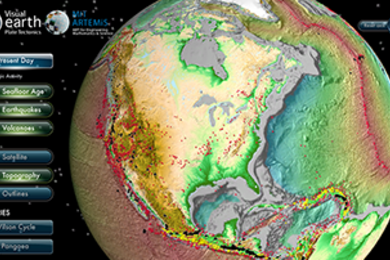
As the world turns: Learning about plate tectonics through on-screen interactions
Created by OEIT's ARTEMiS group, the Plate Tectonics interactive visualization challenges students to interpret a 3-D globe of tectonic data, providing animations of the opening and closing of ocean basins and the splitting of Pangaea.

Newly discovered flux in the Earth may solve missing-mantle mystery
Research points to large reservoirs of material deep in the mantle that may help to explain Earth’s origins.
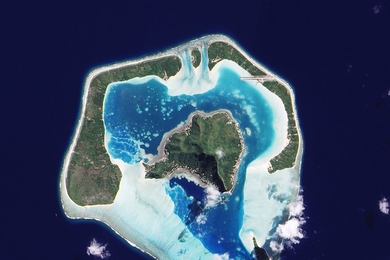
Revising Darwin’s sinking-island theory
New study helps resolve a dispute over the origins of coral-reef formations.

Islands in the rain
Researchers use volcanic islands to measure how rainfall sets the pace of landscape formation.
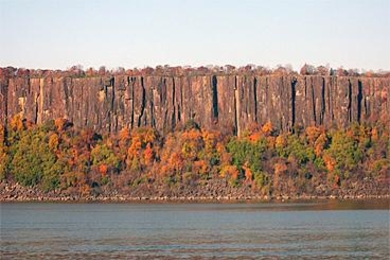
Huge and widespread volcanic eruptions triggered the end-Triassic extinction
Some 200 million years ago, an increase in atmospheric CO2 caused acidification of the oceans and global warming that killed off 76 percent of marine and terrestrial species on Earth.
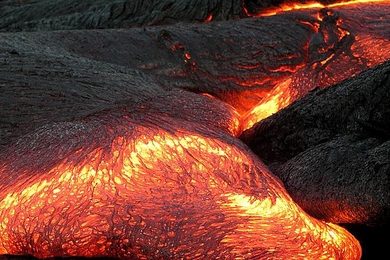
Mercury may have harbored an ancient magma ocean
Massive lava flows may have given rise to two distinct rock types on Mercury’s surface.

India joined with Asia 10 million years later than previously thought
New timeline suggests India’s size before this collision was much smaller than generally assumed.
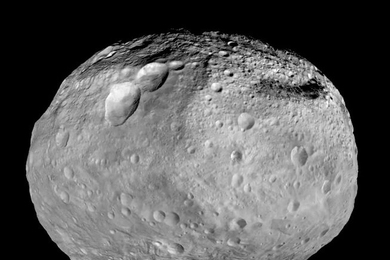
Scientists find first evidence of dynamo generation on an asteroid
A meteorite found in Antarctica holds evidence of a once-active dynamo on Vesta.

Sarah Stewart Johnson, EAPS PhD, gives rein to curiosity
Alumna envisions combining academia with public policy