
The effects of an “algorithmic monoculture” depend on the details
In a study focusing on hiring decisions, MIT researchers found the use of a single algorithm by many firms could benefit job seekers in certain situations.
Download RSS feed: News Articles / In the Media / Audio
In a study focusing on hiring decisions, MIT researchers found the use of a single algorithm by many firms could benefit job seekers in certain situations.

MIT engineers have found a way to stabilize the lipid nanoparticles used to deliver RNA vaccines, which could allow the vaccines to be more widely distributed.

The Climate Grand Challenges “New World of Weather” project shows how modeling, planning tools, and infrastructure analysis are translating research into real-world resilience.

Faculty members and researchers were honored in recognition of their scholarship, service, and overall excellence.

A new device uses reconfigurable motion to mimic the firing behavior of a neuron, which could lead to more efficient computing.
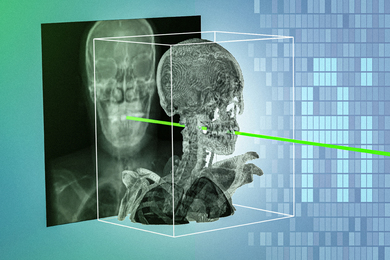
This patient-specific method, called xvr, helps doctors use X-rays for surgical navigation in fields such as orthopedics and neurosurgery.

The senior from Atlanta is majoring in AI and decision making, serves as a leader in several campus groups, and has a soft spot for car improvement projects.

The “HardFlow” algorithm could help generative AI models produce high-quality outputs that obey strict requirements when “pretty close” doesn’t cut it.
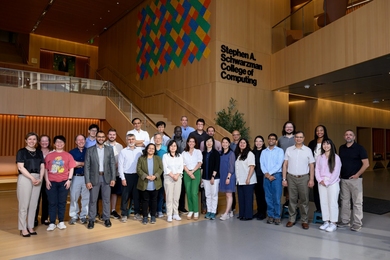
A weeklong summer workshop brought higher education faculty to campus to explore how AI and machine learning materials can be adapted for their classrooms.
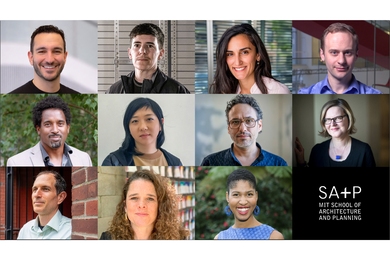
The range of faculty disciplines showcases the breadth of research and scholarship across the school.

The junior, an electrical engineering with computing major, stays busy with many student activities, from giving MIT tours to helping lead her sorority to collaborating with the nonprofit Engineers Without Borders.
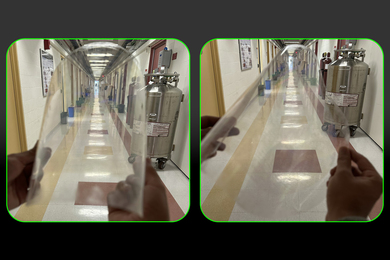
This scalable process produces high-performance chips for applications like discreet wearables or pliable augmented-reality displays.

This advance could be a big step toward developing a scalable, practical quantum computer.

MIT affiliates engage with the MIT-IBM Computing Research Lab to bring rigorous theory to production systems.

A new method, called CW-Net, translates the reasoning process of an autonomous vehicle’s AI system into understandable concepts that explain its behavior.