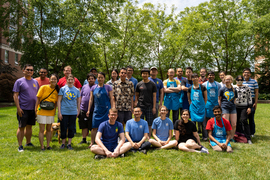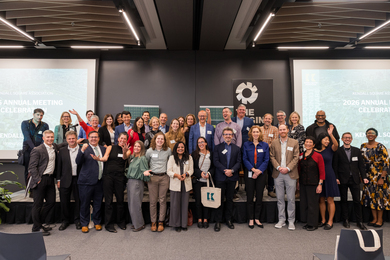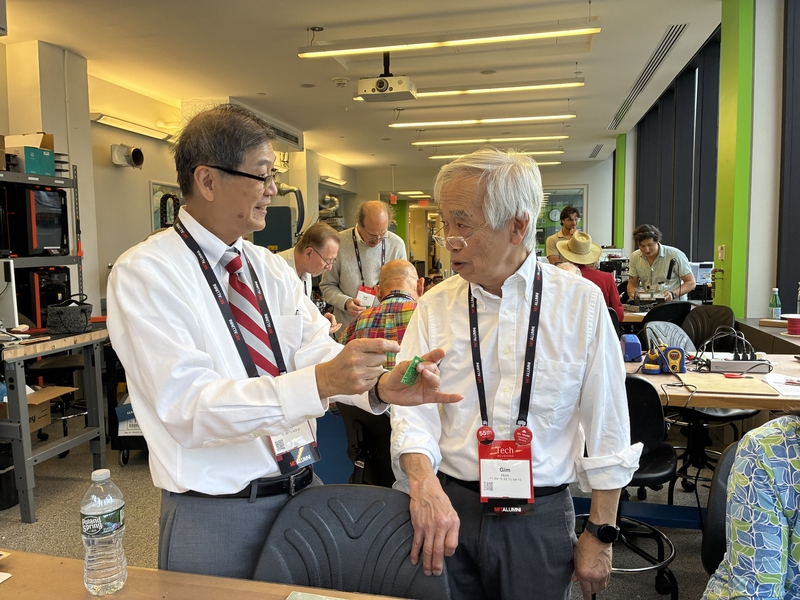
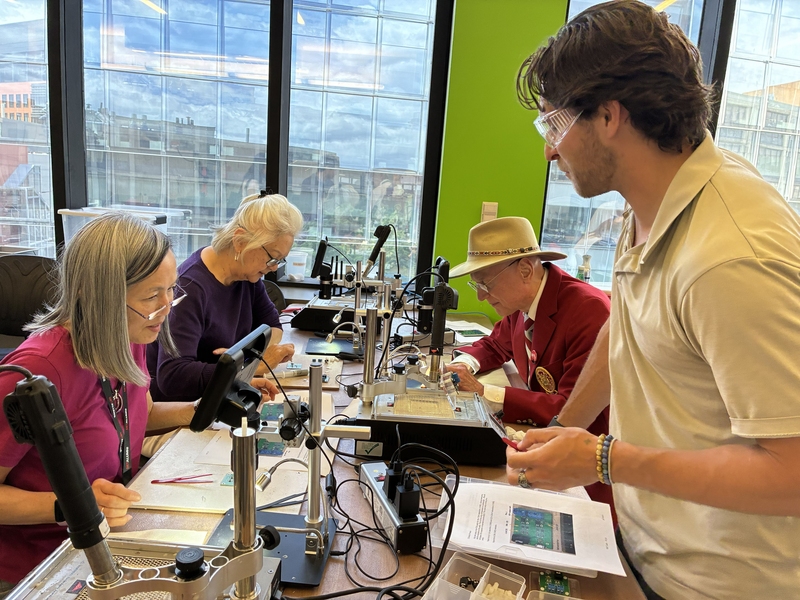
Every year, MIT’s graduation coincides with the joyful reunion of classes past, but this year brought a special occasion for the Department of Electrical Engineering and Computer Science (EECS). Senior Lecturer Gim Hom hosted a special reunion for around 15 of his classmates from the Class of 1971 in the Cypress Engineering Design Studio, a staffed makerspace and classroom run by the department. (Yes, for those of you doing some hasty subtraction, that is a 55th-year reunion.) Participants worked with electronic components just as they did in labs long ago, building their choice of two projects: a simplified electrocardiogram (ECG) and an audio amplifier. But the event wasn’t only a reunion. For Hom, the activity doubled as his chance to teach a “last class.”
He explains: “As a lecturer, I use real-world problems and solutions to teach concepts in analog and digital design. For the reunion activity, I drew upon two existing labs from my courses and stripped out the theory material, leaving only the assembly for the reunion activity.”
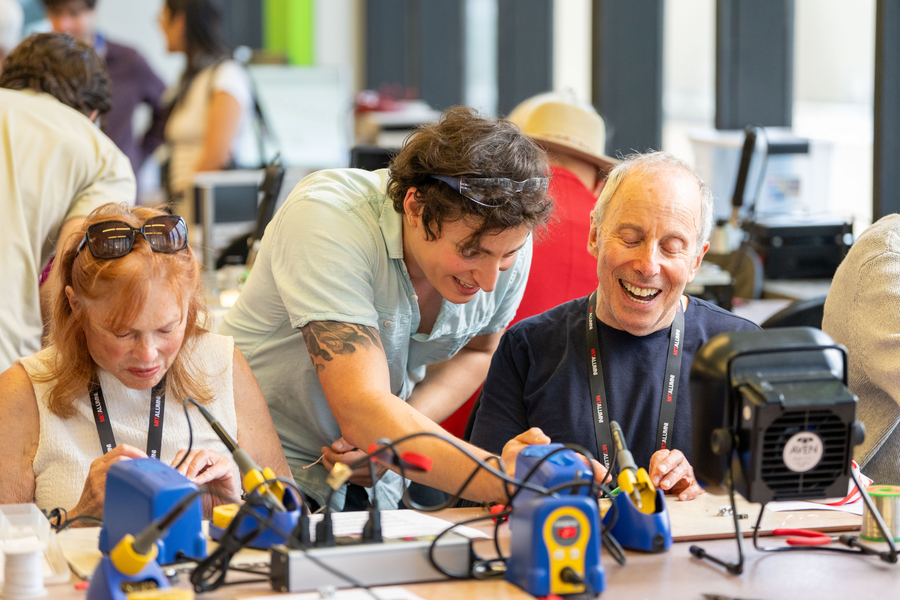
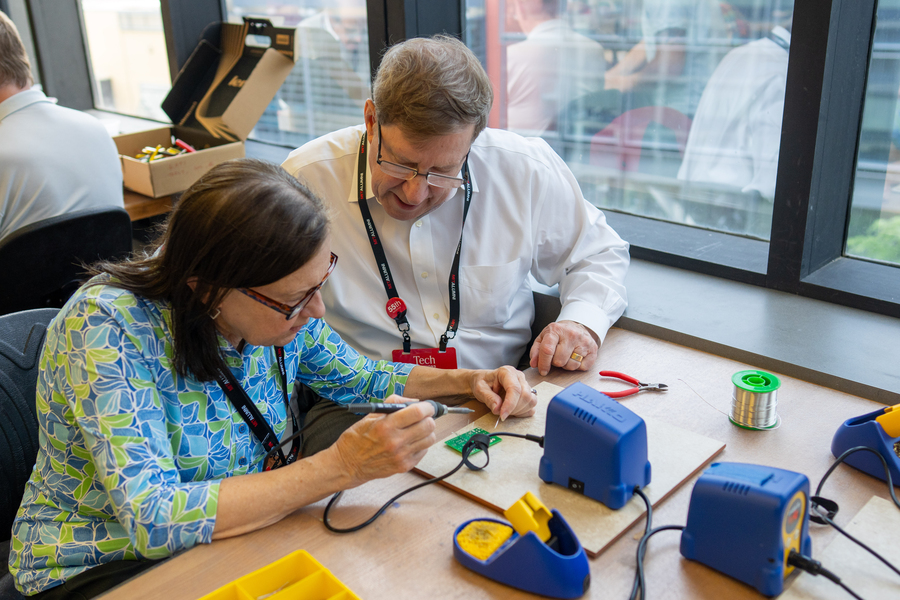
For the first activity, attendees refreshed their soldering skills, assembling a printed circuit board (PCB) that approximated the design of an ECG before attaching electrodes and rolling up their sleeves (literally) to view the electrical impulses of their heartbeats. Hom explains that “in 6.2040 (Analog Lab), I use the ECG as a platform for teaching signal acquisition, filtering, and display. Students first analyze the design of an ECG circuit and then build and solder the board themselves, gaining hands-on experience with printed circuit board assembly. For many students, this is their first exposure to soldering.”
In the second activity, the alumni learned to surface mount solder, a skill that, while technically possible, had not yet become popularized during their time as undergraduates at MIT. “Modern electronics primarily rely on surface-mount technology (SMT),” explains Hom. “To give students exposure to SMT assembly, I designed an optional laboratory project: a small USB-powered audio amplifier that students can use to play music from their phones. While external speakers must be connected, the amplifier yields surprisingly good sound quality.”
Throughout the day, technical instructors Anthony Pennes and Liam Ackerman (both coincidentally celebrating their own reunions, at 10 and 5 years out from MIT, respectively) remained on hand to answer questions and familiarize attendees with the technology available in the Engineering Design Studio, which is open to the EECS community from morning until nearly midnight throughout the school year.
“It was wonderful to see alumni leave with a working board with big smiles on their faces,” says Hom, who, while no longer teaching, will continue part time as an advisor to EECS students.
Meanwhile, his classmates have a working memento of their time at MIT — and a reminder that technical skills can last a lifetime.