
Researchers tune into Arctic under-ice sounds and test through-ice communication
The work is part of a multiyear effort to develop a distributed sensor network for relaying data collected from this critical region.
The work is part of a multiyear effort to develop a distributed sensor network for relaying data collected from this critical region.
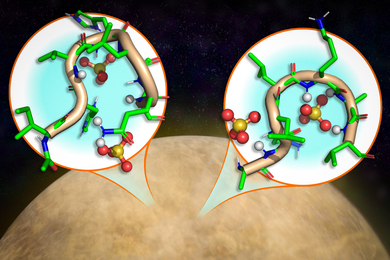
New research offers support for the possibility that complex biological molecules could exist in the highly acidic environment of Venus’s cloud layer.

Climate scientist Sai Ravela is using games to help coastal communities find creative adaptations to climate change.

The PhD student’s research on how microorganisms digest compounds in their environment could enable advances in wastewater treatment.

The discovery likely represents the earliest known evidence of a magnetic field in the infant solar system.
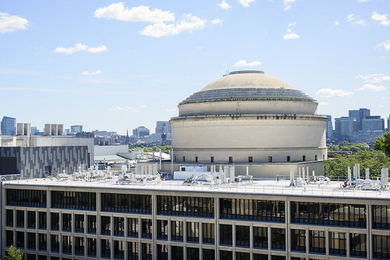
The Materials Research Science and Engineering Center unites researchers across disciplines to develop technologies for medical imaging, sustainable metals production, and next-generation electronics.

Using modern tools, they also determined that carbon tetrachloride, used as a dry-cleaning and degreasing agent as early as the 1930s, was at the root of early ozone loss.

A new model links Earth’s mass extinctions to mismatches between rates of environmental change and biological adaptation.

Fourth-year PhD candidate Perrin Davidson studies the carbon cycle to understand how the planet responds to global disturbances.

The MIT professor’s groundbreaking work on atmospheric chemistry helped lay steps towards recovery of the ozone layer and demonstrated the lasting impacts of carbon emissions on Earth’s climate.

MIT senior Nik Sandu bridges scientific research with a strong commitment to teaching and community.

Scientists say an exception in the Montreal Protocol for the use of ozone-depleting feedstocks could set the ozone recovery back seven years.

From lazy ripples to towering breakers, waves should vary widely from one planet to another, according to a new model.

MIT Energy Initiative symposium maps a path to tap the planet’s heat-rich rocks for clean power at scale.
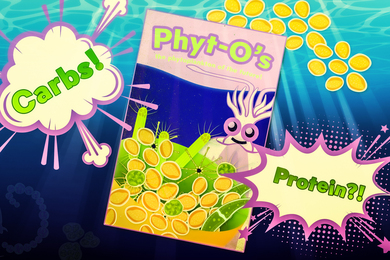
With warmer ocean temperatures, the composition of marine plankton could shift from protein-rich to carb-heavy, a new study suggests.