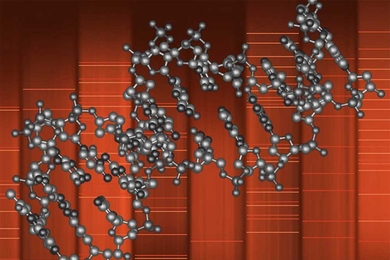
Reading DNA, backward and forward
MIT biologists reveal how cells control the direction in which the genome is read.
MIT biologists reveal how cells control the direction in which the genome is read.
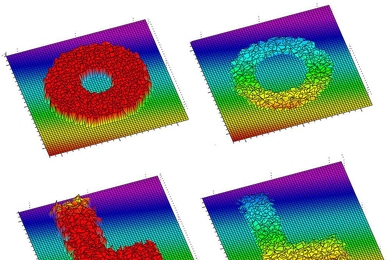
Folded DNA templates allow researchers to precisely cut out graphene shapes, which could be used in electronic circuits.
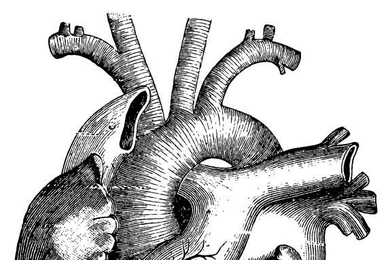
Biologists find that long non-coding RNA molecules are necessary to regulate differentiation of embryonic stem cells into cardiac cells.
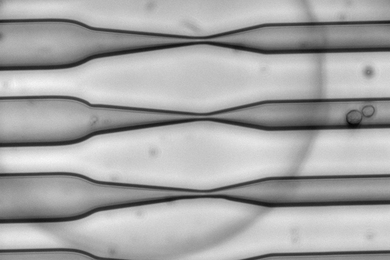
By deforming cells, researchers can deliver RNA, proteins and nanoparticles for many applications.
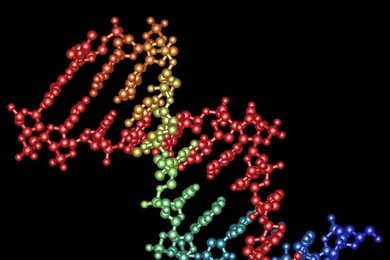
New method allows scientists to insert multiple genes in specific locations, delete defective genes.
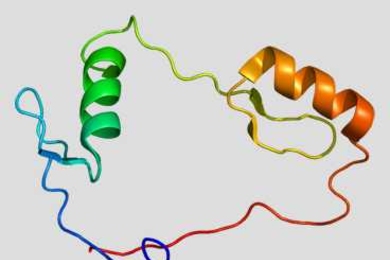
A new method identifies the precise binding sites of transcription factors — proteins that regulate the production of other proteins — with 10 times the accuracy of its predecessors.
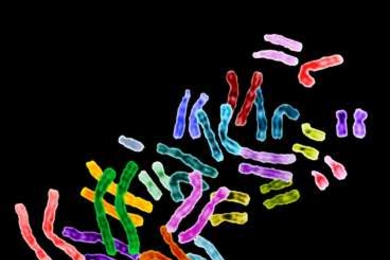
New map provides a reference for interpreting function of disease-associated regions.
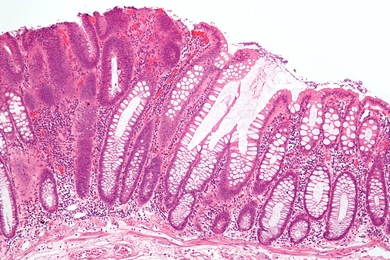
Findings may help predict colon cancer risk for patients with inflammatory bowel disease.

MIT study suggests that at low dose-rate, radiation poses little risk to DNA.
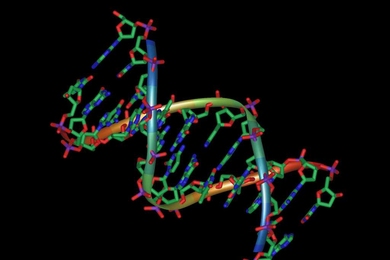
Team uncovers mechanism that produces fatal DNA damage in bacteria.
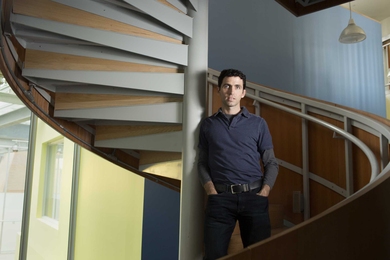
Manolis Kellis uses computational techniques to decipher human disease.
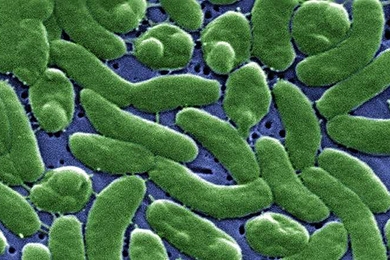
A single gene mutation can sweep through a population, opening the door for the concept of ‘species’ in bacteria.

Amy Keating models critical interactions that underlie most cellular functions.

New study could explain why variant enzymes boost the risk of cancer for some people.
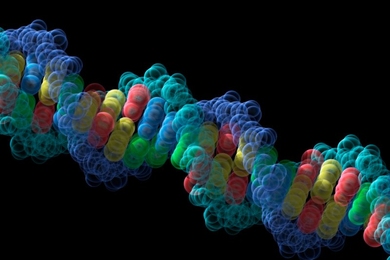
In a new book, prominent historian of science dismisses the ‘unanswerable’ question of whether heredity or the environment matter more in human development.