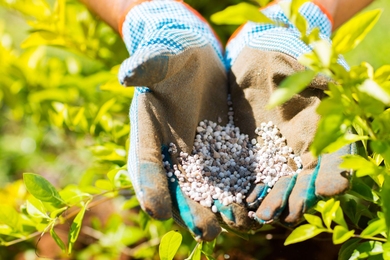
Local rocks can yield more crops
J-WAFS-funded MIT research team shows a new method of fertilizer production can better suit the needs of farms in Africa and around the globe.
J-WAFS-funded MIT research team shows a new method of fertilizer production can better suit the needs of farms in Africa and around the globe.
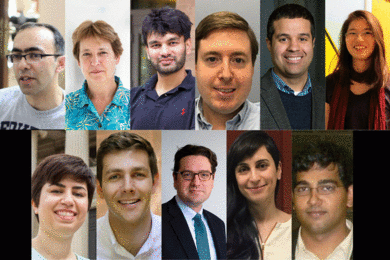
Members have made advances in molecular processes, rheology, computer networking, nanocrystalline metals, affective computing, and semiconductor tech.

New system of “strain engineering” can change a material’s optical, electrical, and thermal properties.
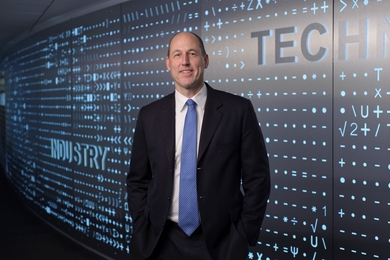
Professor of materials science and engineering to lead MIT’s research enterprise in Singapore.

Microscopy technique could help researchers design safer reactor vessels or hydrogen storage tanks.
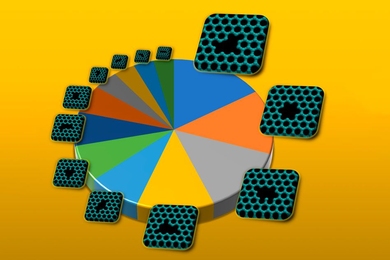
Theoretical analysis distinguishes observed “holes” from the huge list of hypothetically possible ones.
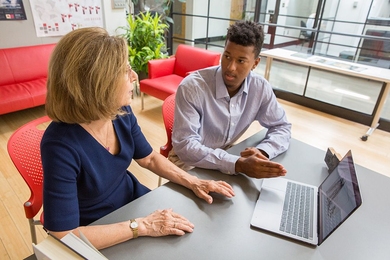
Students in the MIT Energy Initiative Undergraduate Research Opportunities Program build professional skills.
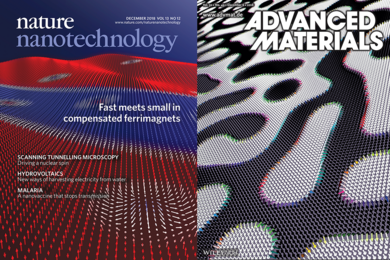
MIT researchers show how to make and drive nanoscale magnetic quasi-particles known as skyrmions for spintronic memory devices.

First measurement of its kind could provide stepping stone to practical quantum computing.
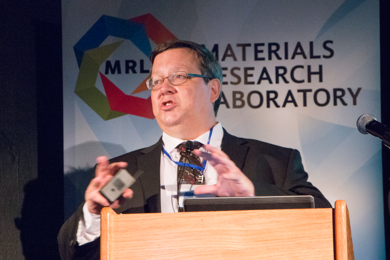
In MIT visit, BP chemist details new X-ray and sample chamber technologies, yielding insights into fighting metal corrosion, improving catalytic reactions, and more.
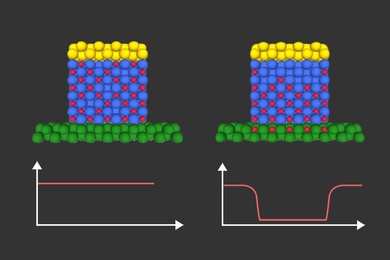
Innovative approach to controlling magnetism could lead to next-generation memory and logic devices.

The School of Engineering’s faculty leadership weigh in on what the MIT Stephen A. Schwarzman College of Computing will mean for their students and faculty.
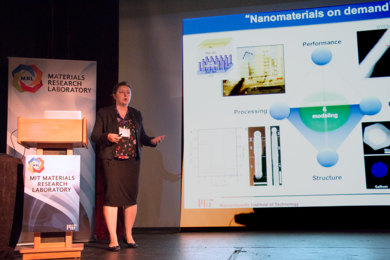
At the Materials Day Symposium, researchers focus on tools that probe atomic structures in action to yield better designs for metals, solar cells, and polymers.

New design could greatly extend the shelf life of single-use metal-air batteries for electric vehicles, off-grid storage, and other applications.