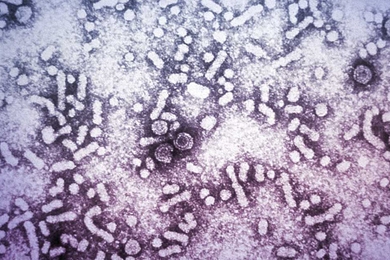
Model of viral lifecycle could help in finding a cure for hepatitis B
New technique sustains virus in liver cells, allowing study of immune response and drug treatments.
New technique sustains virus in liver cells, allowing study of immune response and drug treatments.
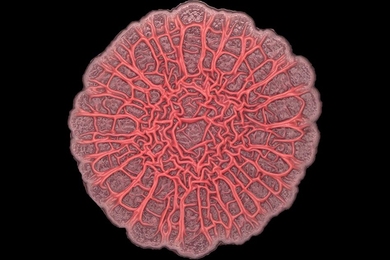
Research shows the success of a bacterial community depends on its shape.
Five-year grant will support research on cancer therapy, artificial tissue homeostasis, and infectious diseases.
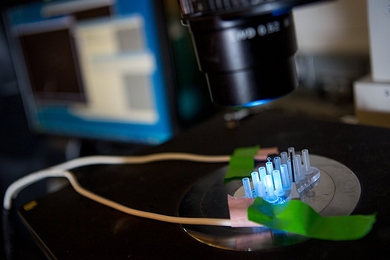
New microfluidic technique quickly distinguishes bacteria within the same strain; could improve monitoring of cystic fibrosis and other diseases.
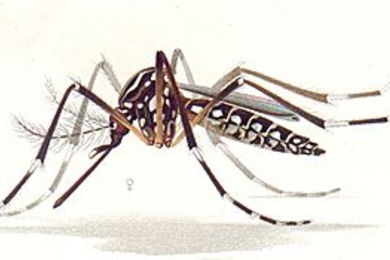
Mice with human immune cells help researchers discover how the mosquito-borne virus depletes blood platelets.

MIT’s Institute for Medical Engineering and Science brings many tools to the quest for new disease treatments and diagnostic devices.
Stephanie Seneff is using the novel natural language processing techniques she developed to better understand how drugs and environmental toxins impact human health.

MIT study combines new model of malaria transmission with global forecasts for temperature and rainfall.
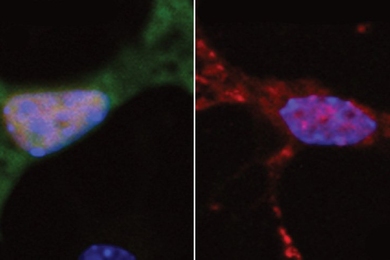
New study finds link between neurons’ inability to repair DNA and neurodegeneration.
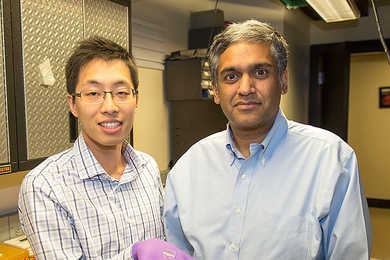
New prototype device recognizes electrical properties of infected cells as signatures of disease.

Study shows that in the face of an epidemic, even moderate government-mandated travel restrictions would slow contagion.
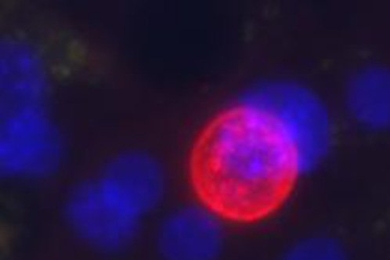
Engineered liver tissue developed at MIT could help scientists test new drugs and vaccines.
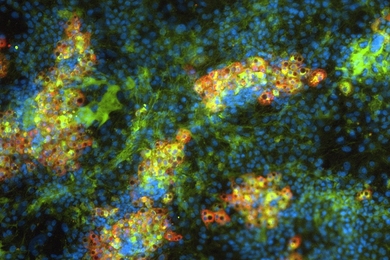
Researchers identify compounds that help liver cells grow outside the body.
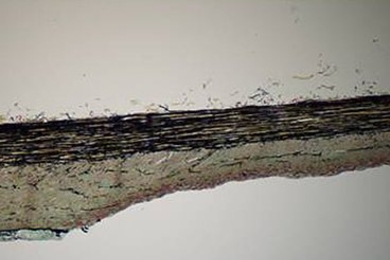
Computational model offers insight into mechanisms of drug-coated balloons.

MIT engineers find that in the earliest stages of arthritis, high-impact exercise may worsen cartilage damage.