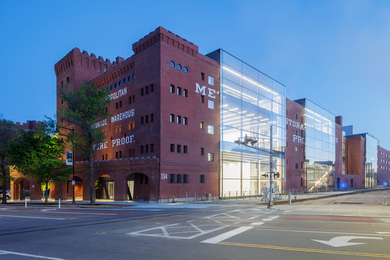
Met Warehouse opens as the new home of MIT’s School of Architecture and Planning
In a feat of adaptive reuse, a massive, century-old brick storage facility has been turned into a contemporary hub for collaboration and creative work.
In a feat of adaptive reuse, a massive, century-old brick storage facility has been turned into a contemporary hub for collaboration and creative work.

A new online platform helps engineers look beyond survival mode when designing habitats for extreme living conditions.

“GeoPT” helps AI models understand the basics of physics so they can simulate how objects respond to things like wind and water more efficiently and accurately.

The “ShiftLens” design and fabrication system creates objects that change their surface appearance based on user interactions, without any electronics.

Nicholas de Monchaux reflects on guiding the MIT Department of Architecture through a period of dramatic change for the profession.

Researchers developed an automated framework that helps AI models generate CAD programs more accurately and efficiently.
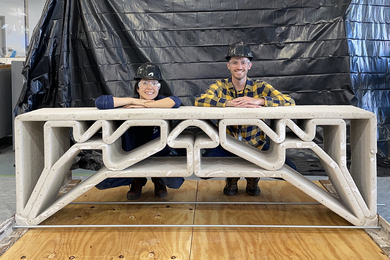
MIT researchers developed a framework that folds a printer’s real-world limits into the optimization, while revealing that better hardware could sharply reduce material use.

MIT students designed, built, and tested a jet engine with AI copilots, assessing AI’s usefulness in developing high-performance aerospace systems.
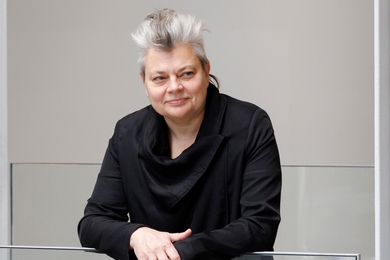
In this leadership role, Miljački seeks to shepherd a collective commitment to transform the present into a better future.
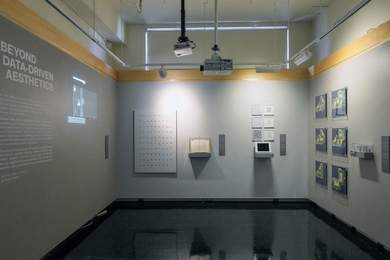
In a new Keller Gallery exhibition, Alexandros Haridis SM ’17, PhD ’22 traces centuries of ideas about aesthetic judgment and explores how design can make complex computational systems visible.
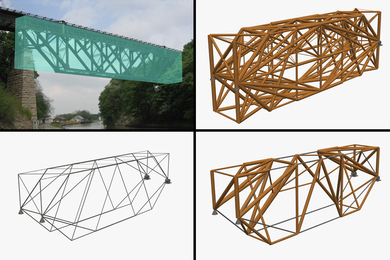
MIT researchers developed an approach for generating more buildable structures, bridging the gap between optimized design and real-world construction.
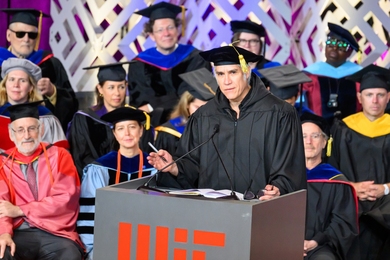
“All of us need to feel we are valuable,” says the SA+P Commencement speaker, a Chilean architect and Pritzker Prize winner.

Senior Krystal Montgomery explored design courses to shape a career in web development. As a national champion in track, learning to balance athletics and academics was key to her success.
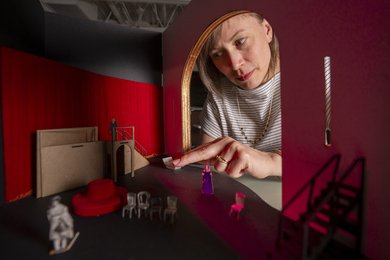
Associate Professor Sara Brown, an accomplished theater set designer, teaches MIT students to create and think visually.
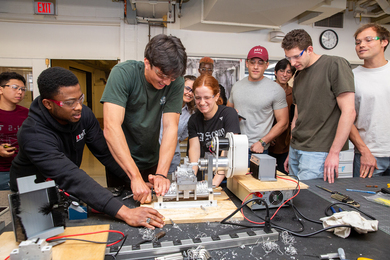
In 2.72/2.270 (Elements of Mechanical Design), “if it doesn’t break the laws of physics, it’s possible; you just have to figure out how to engineer it.”