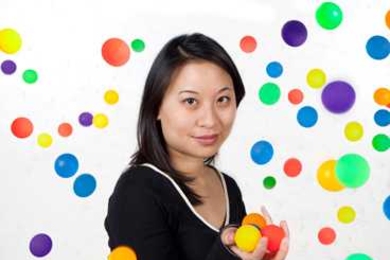
Recreating human livers, in mice
‘Humanized’ mice could help scientists study the side effects of new drugs before they reach clinical trials.
‘Humanized’ mice could help scientists study the side effects of new drugs before they reach clinical trials.
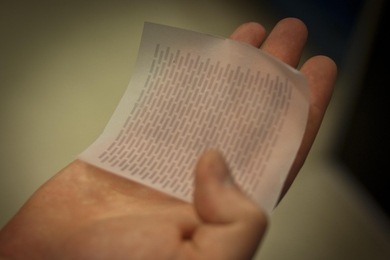
New MIT-developed materials make it possible to produce photovoltaic cells on paper or fabric, nearly as simply as printing a document.

Researchers believe that comparing products, rather than rating them on an absolute scale, will lead to algorithms that better predict customers’ preferences.
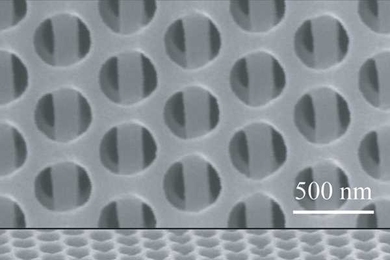
Combining top-down and bottom-up approaches, new low-cost method could be a boon to research with a variety of applications.

A new algorithm could help prevent midair collisions, which involve 10 to 12 small aircraft every year.

New type of sensor could immediately detect tiny cracks in structures and relay their exact location.
France-MIT Forum on Energy unveils new joint laboratory, explores other potential collaborations.

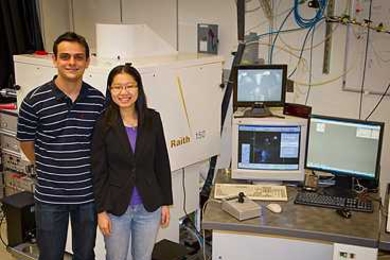
MIT researchers show how to make e-beam lithography, commonly used to prototype computer chips, more practical as a mass-production technique.
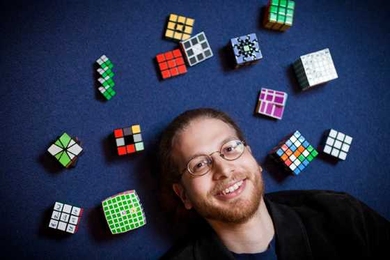
New research establishes the relationship between the number of squares in a Rubik’s-cube-type puzzle and the maximum number of moves required to solve it.

Two from CEE and one from EECS to participate in symposium for young engineering innovators.

Method holds promise for making two- or three-tier graphene films that could be used for new electronic devices.
One student, two recent graduates to travel to Japan, Ghana and the Dominican Republic.

Award honors his contributions to materials science and engineering in the domain of civil engineering.