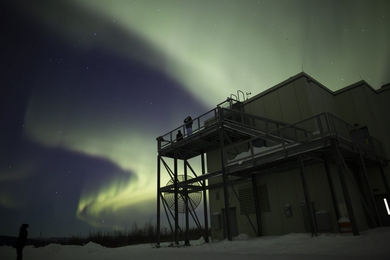
MIT students study plasma physics beneath Alaska’s aurora
Student-led expeditions use distributed instruments to observe auroral structures and probe space plasma in real-world conditions.
Student-led expeditions use distributed instruments to observe auroral structures and probe space plasma in real-world conditions.

Six MIT faculty, along with 10 additional alumni, are recognized by their peers for their outstanding contributions to research in the natural and social sciences.
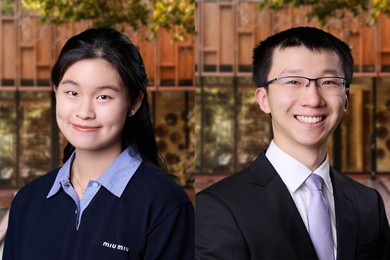
The prestigious fellowship funds graduate studies at Stanford University.
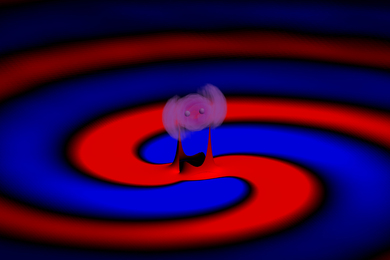
Gravitational waves emitted by colliding black holes may bear imprints of dark matter, which physicists could detect with a new model.
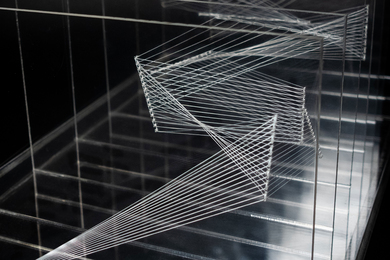
A new technique helps scientists measure a phenomenon that can cause quantum circuits to perform differently than expected, increasing the error in computations.
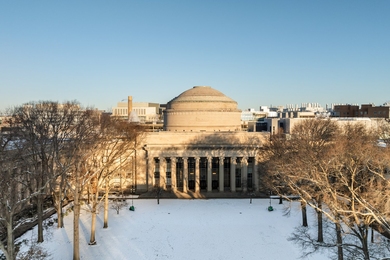
Faculty members and researchers were honored in recognition of their scholarship, service, and overall excellence.
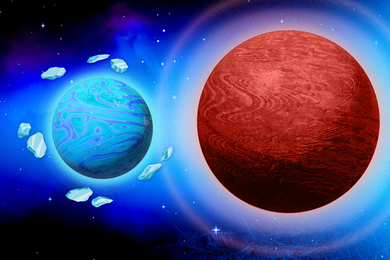
New measurements of a hot Jupiter and its mini-Neptune companion suggest both planets formed surprisingly far away from their host star.
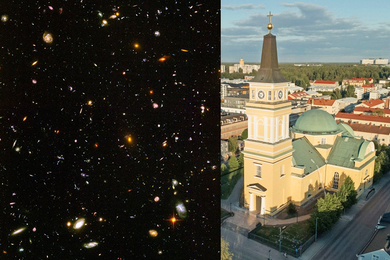
An immersive sound installation at Oulu Cathedral, Finland, co-created by MIT Associate Professor Kiyoshi Masui, transforms more than 4,000 cosmic signals into spatial audio.
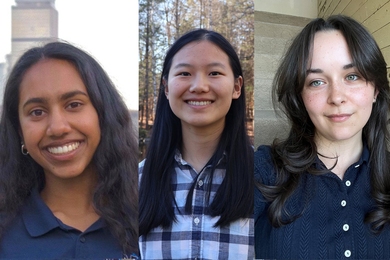
Rising seniors Deeksha Kumaresh, Anna Liu, and Charlotte Myers are honored for their academic achievements.
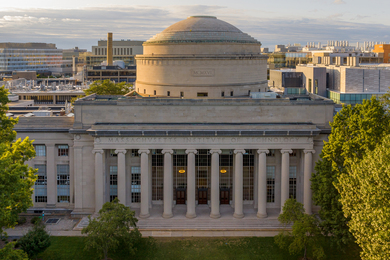
The prestigious honor society honors four MIT faculty and 13 additional MIT alumni among more than 250 new members.
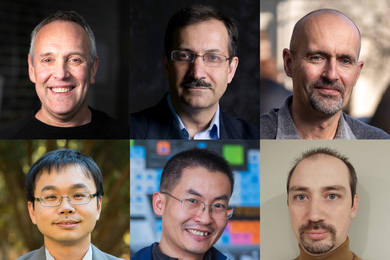
Two faculty and six additional alumni win top APS awards and prizes; four faculty and 12 additional alumni named APS Fellows.
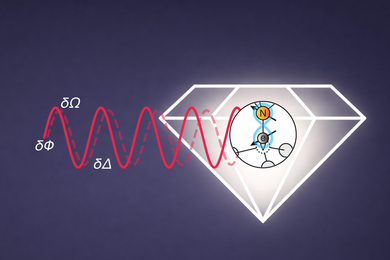
The devices represent a key step toward practical quantum sensing, with applications in biomedical sensing, materials characterization, and more.
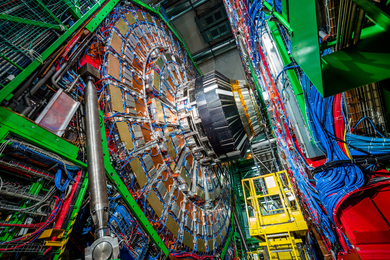
The team’s ultra-precise measurement confirms the Standard Model’s predictions.
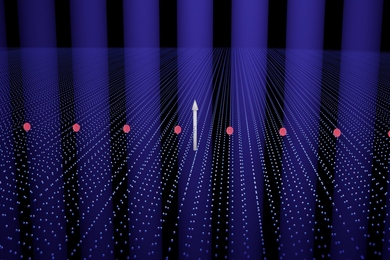
MIT physicists have discovered 3D “moiré crystals” that simulate four-dimensional quantum materials to a T.