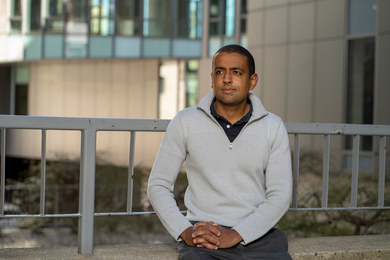
Through econometrics, Isaiah Andrews is making research more robust
“I would like to understand the extent to which we understand things,” the MIT economist says.
“I would like to understand the extent to which we understand things,” the MIT economist says.

In the new economics course 14.163 (Algorithms and Behavioral Science), students investigate the deployment of machine-learning tools and their potential to understand people, reduce bias, and improve society.

Ranking at the top for the 13th year in a row, the Institute also places first in 11 subject areas.

The fellowships provide five years of funding to doctoral students in applied science, engineering, and mathematics who have “the extraordinary creativity and principled leadership necessary to tackle problems others can’t solve.”

Letting people work with a “navigator” dramatically increases how often they move to higher-opportunity neighborhoods.
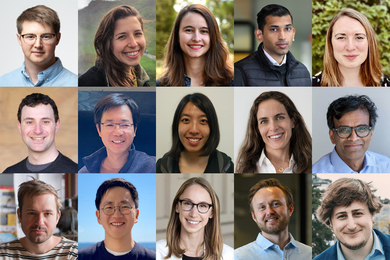
Fifteen new faculty members join six of the school’s academic departments.
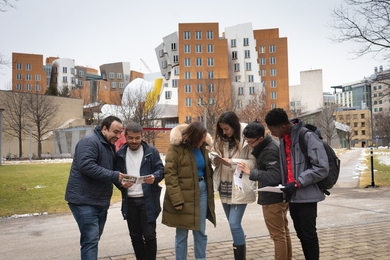
Students have new avenues for learning and research on the most effective approaches to fighting poverty in the US and other high-income countries.
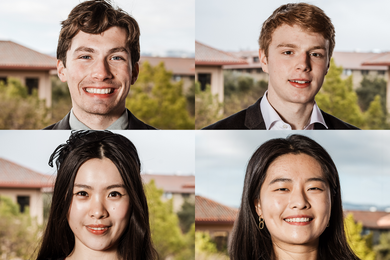
The fellowship funds graduate studies at Stanford University.

The acclaimed cellist and writer discussed his new memoir and reflected on a remarkable musical career.
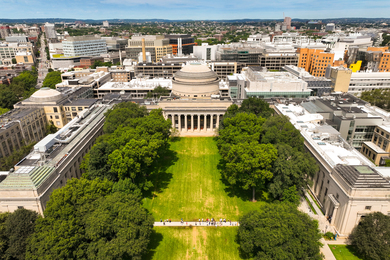
The prestigious honor society announces more than 250 new members.
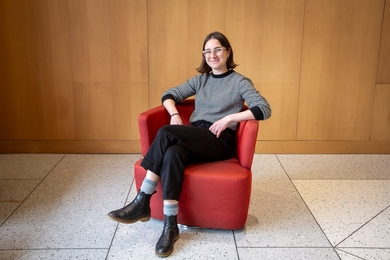
MIT economics doctoral student Anna Russo studies how to improve the design, function, and outcomes of public policies.
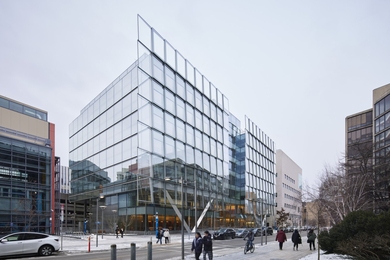
The MIT Schwarzman College of Computing building will form a new cluster of connectivity across a spectrum of disciplines in computing and artificial intelligence.
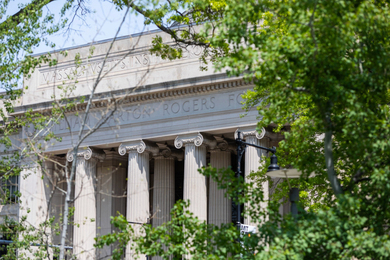
The Institute also ranks second in five subject areas.
Made possible by an ongoing fundraising initiative, the new program prioritizes building resources for economics faculty research.

Combing through 35,000 job categories in U.S. census data, economists found a new way to quantify technology’s effects on job loss and creation.