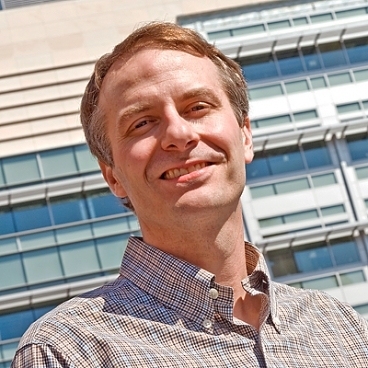
Matthew Vander Heiden, assistant professor of biology and member of the David H. Koch Institute for Integrative Cancer Research at MIT, has been named a 2011 recipient of the Damon Runyon-Rachleff Innovation Award.
The $450,000 grant, spread over three years, is awarded to early career scientists whose projects have the potential to significantly impact the prevention, diagnosis and treatment of cancer.
Vander Heiden, who is one of five recipients this year, studies nutrient metabolism in cancer cells, which is different from that of most normal cells. Vander Heiden aims to rigorously define how altered cell metabolism contributes to cancer cell proliferation, and to clarify exactly how nutrients are used by cancer cells. This approach will lead to a better understanding of how specific metabolic pathways are used to help cancer cells grow, and holds the key to targeting metabolism for better cancer treatments.
The $450,000 grant, spread over three years, is awarded to early career scientists whose projects have the potential to significantly impact the prevention, diagnosis and treatment of cancer.
Vander Heiden, who is one of five recipients this year, studies nutrient metabolism in cancer cells, which is different from that of most normal cells. Vander Heiden aims to rigorously define how altered cell metabolism contributes to cancer cell proliferation, and to clarify exactly how nutrients are used by cancer cells. This approach will lead to a better understanding of how specific metabolic pathways are used to help cancer cells grow, and holds the key to targeting metabolism for better cancer treatments.