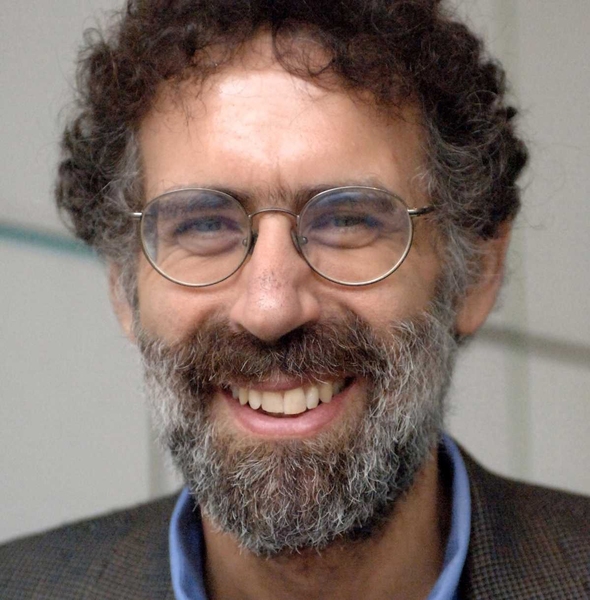
Mitchel Resnick, the LEGO Papert Professor of Learning Research at the MIT Media Lab, has been awarded the 2011 Harold W. McGraw Jr. Prize in Education from the McGraw-Hill Research Foundation. He accepted the award in a Tuesday ceremony at the New York Public Library.
The prize, which carries an award of $50,000, is given to researchers and educators who are pioneering new approaches to digital education.
Resnick was cited for his work developing new technologies to help children learn to “think creatively, reason systematically and work collaboratively.” He has focused especially on prekindergarten and elementary education; some of his most successful projects include the LEGO Mindstorms robotics kits, the Scratch online programming community for young people, and an international network of after-school learning centers for low-income students called the Computer Clubhouse.
“Digital learning is the opportunity of the century,” said Harold McGraw III, chairman, president and CEO of The McGraw-Hill Companies. “For many students around the world, technology makes education more accessible, adaptable and affordable. We applaud these exceptional leaders for guiding the way and enriching the lives of so many students.”
Other winners were Robert Beichner, a professor of physics at North Carolina State University; and Julie Young, president and CEO of the Florida Virtual School.
The prize, which carries an award of $50,000, is given to researchers and educators who are pioneering new approaches to digital education.
Resnick was cited for his work developing new technologies to help children learn to “think creatively, reason systematically and work collaboratively.” He has focused especially on prekindergarten and elementary education; some of his most successful projects include the LEGO Mindstorms robotics kits, the Scratch online programming community for young people, and an international network of after-school learning centers for low-income students called the Computer Clubhouse.
“Digital learning is the opportunity of the century,” said Harold McGraw III, chairman, president and CEO of The McGraw-Hill Companies. “For many students around the world, technology makes education more accessible, adaptable and affordable. We applaud these exceptional leaders for guiding the way and enriching the lives of so many students.”
Other winners were Robert Beichner, a professor of physics at North Carolina State University; and Julie Young, president and CEO of the Florida Virtual School.