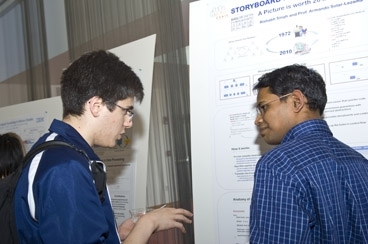
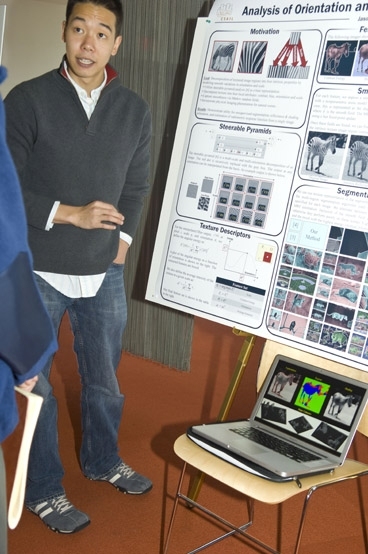
Every year since the MEng degree was established 17 years ago, the Department of Electrical Engineering and Computer Science (EECS) has hosted Masterworks, an event designed to give MEng students the opportunity to present their research work to fellow students, faculty members and other community members. As added enticement, awards for best presentations are given at the annual year-end Spring Fling awards event held later in May.
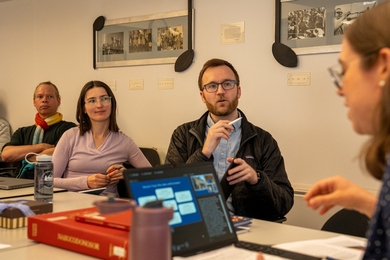
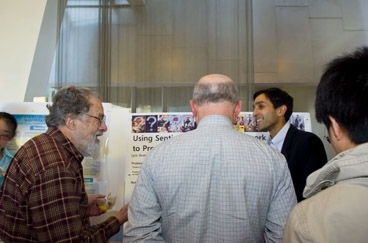
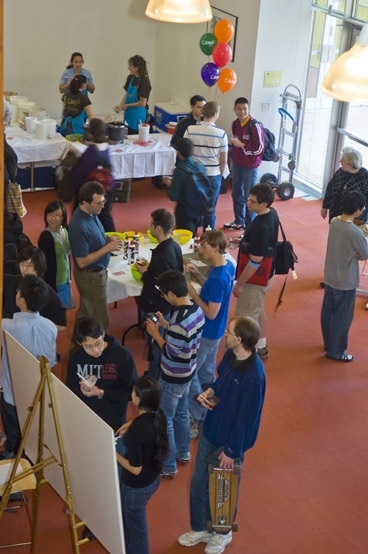
Masterworks was opened to EECS Master of Science students several years ago. This year, following a two-year precedent featuring presentations in the Stata Center R&D area, 26 entrants engaged in lively discussions and multiple impromptu explanations of poster material. Ample ice cream servings with choice of multiple toppings fueled presenters and engaged viewers.
Abstract topics included:
Masterworks was opened to EECS Master of Science students several years ago. This year, following a two-year precedent featuring presentations in the Stata Center R&D area, 26 entrants engaged in lively discussions and multiple impromptu explanations of poster material. Ample ice cream servings with choice of multiple toppings fueled presenters and engaged viewers.
Abstract topics included:
- "A Computational Framework to Study Co-ordination of Human Ankle Muscle-Tendon Action in Normal Walking"
- "Band-toband Tunneling in Silicon Diodes"
- "Patient-Adaptive Classification of Ectopic Heartbeats When Little or No Expert Knowledge is Available"
- "Using Sentiment and Social Network Analyses to Predict Opening-Movie Box-Office Success"