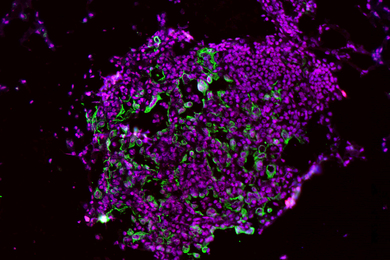
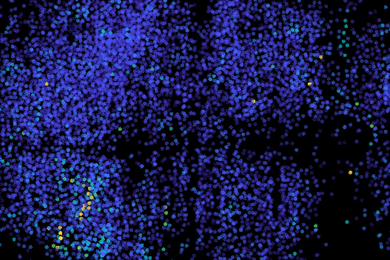
Researchers at the Broad Institute of MIT and Harvard have received a five-year grant of about $15 million from the National Institutes of Health (NIH) to map the epigenomes of a variety of medically important cell types, including human embryonic stem cells.
The grant, part of the NIH Roadmap for Medical Research, designates Broad as one of four Reference Epigenome Mapping Centers nationwide that will aim to transform the understanding of an exquisite control system -- a code of so-called "epigenetic" cues that specify when and where in the body genes are made active.
To systematically decipher and analyze these controls, researchers from across the MIT and Harvard communities will come together to study at least 100 distinct types of human cells using the latest methods in stem-cell biology, genomics, technology, computation and production-scale research.
A version of this article appeared in MIT Tech Talk on October 1, 2008 (download PDF).